Westfield, NJ
Westfield Drywall Repair That Fixes First
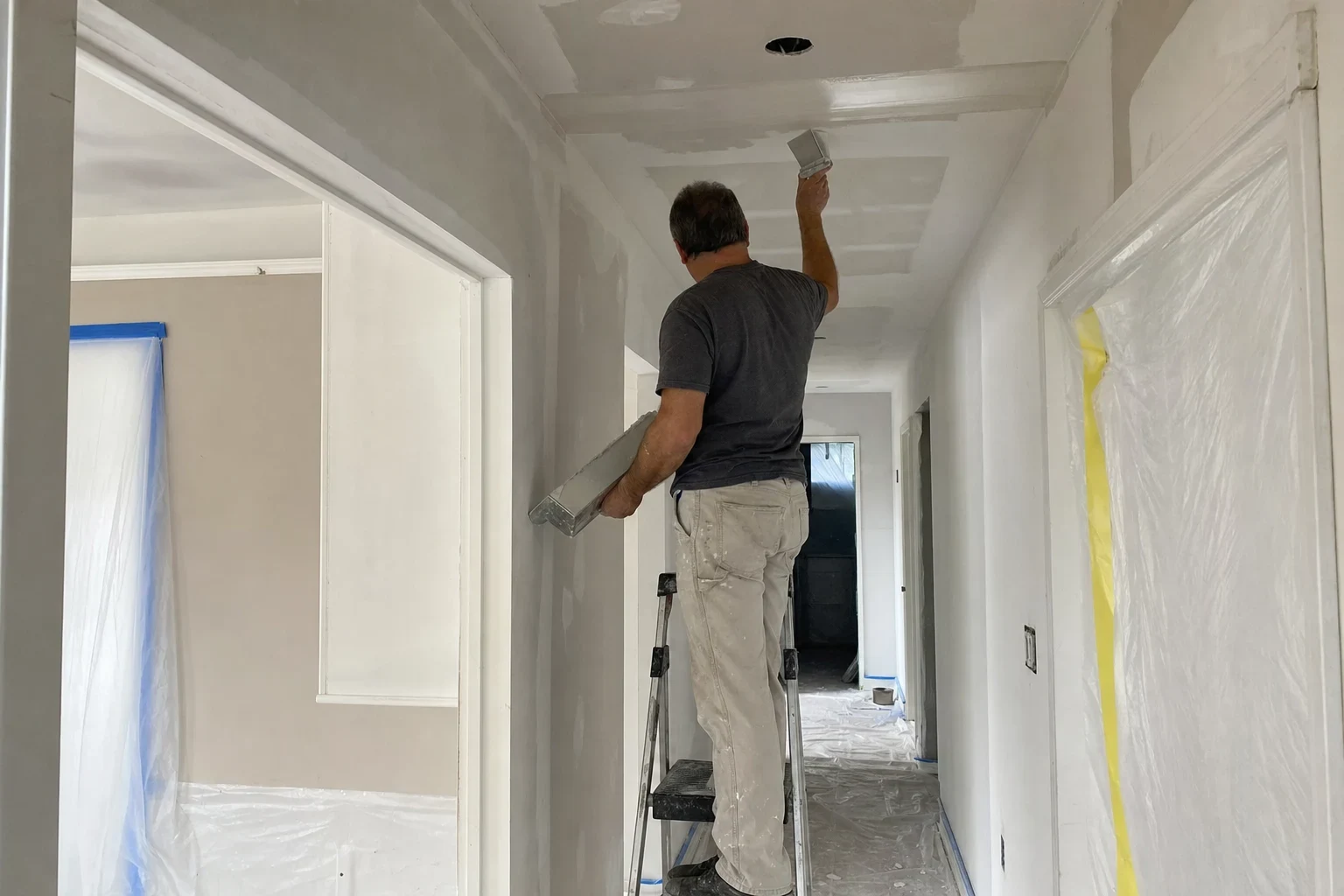
We repair dented, cracked and water-stained walls and ceilings, patch holes of every size, and hang and finish new drywall when a section truly needs it. We match the texture, blend the paint touch-up and leave a clean work area in homes across Westfield, Cranford and Garwood.
- Repair-first recommendations
- Written line-item quotes
- Texture matched by hand
- Clean work area daily
Why Homeowners and Landlords Call Us
You should know what is actually wrong before anyone starts cutting. Here is how we work once we are in your home.
We tell you when a patch is enough
A cracked seam or a fist-sized hole is a repair job, and we will say so. If the board is soft, moldy or sagging, we explain why replacing that section is the better spend and show you what we found.
Texture matching done by hand
Knockdown, orange peel, light skim or smooth, we test the texture on scrap first and adjust until it blends. A patch that looks like a patch is not finished.
A quote you can read line by line
Your written quote lists each area, what we plan to do and what is included, so you can compare it, question it or trim it.
Your rooms stay livable
We lay drop cloths, mask doorways and vents, and use dust-control sanding where it fits the job. When we pack up each evening, the floor is vacuumed, our tools are out of your way and your furniture is back where you can use it.
Help with insurance paperwork
If a leak caused the damage, we can document what we see with photos and a clear scope of work for your claim. Your adjuster makes the coverage decisions; we just give them accurate information.
Drywall and Ceiling Work We Handle
Most damaged walls do not need to come down. We handle drywall repair and drywall patching for doorknob holes, popped nails, cracked tape seams and dents from moving day. When a section is too far gone, we cut it out and do drywall hanging and drywall finishing so the new board disappears into the old. We also take on ceiling repair, wall repair, surface preparation and sanding, and paint touch-ups on the areas we fix.
Drywall Repair
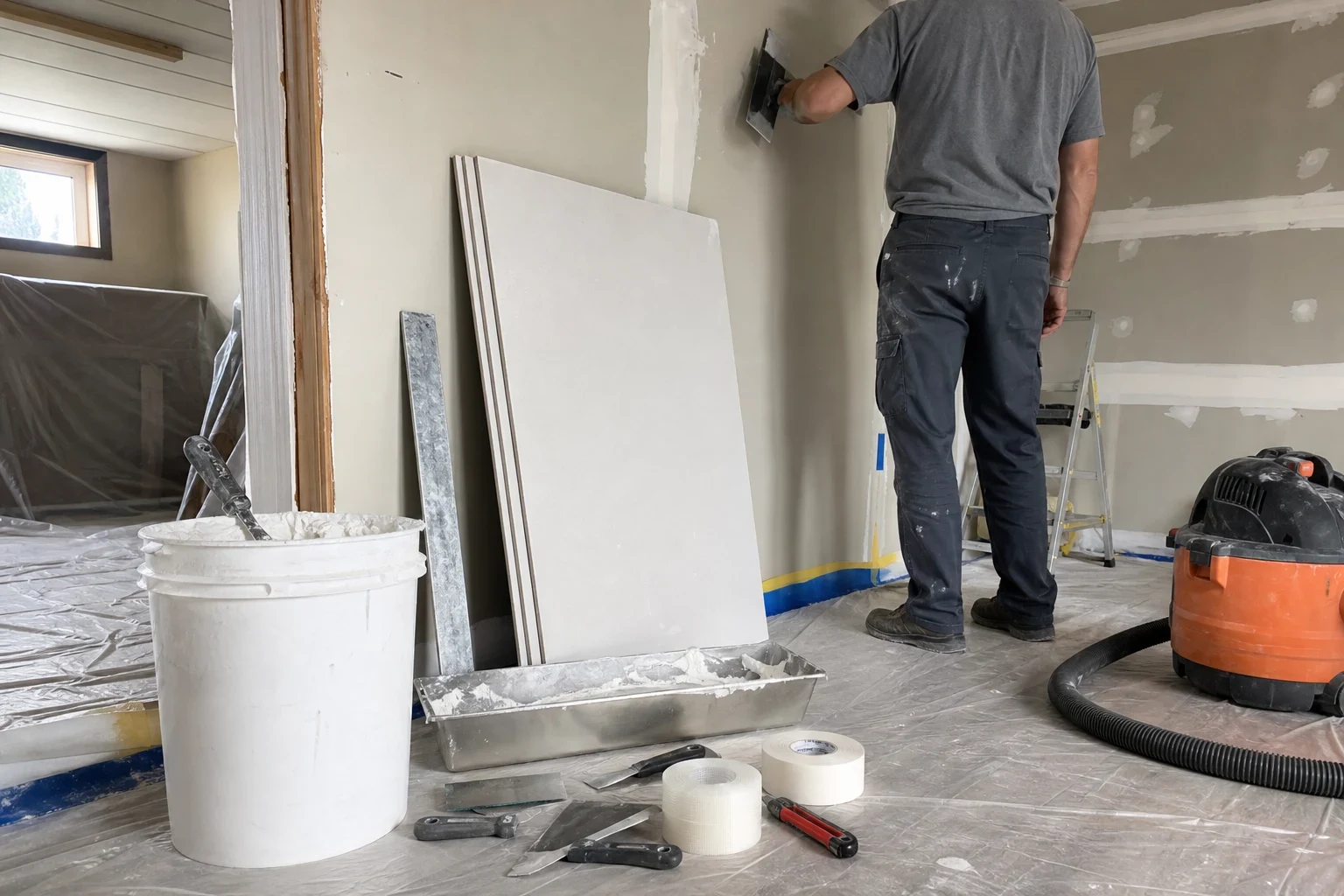
Holes, cracks, popped screws and water-stained drywall fixed and blended so the repair disappears, with replacement suggested only when it truly makes more sense.
Drywall Patching
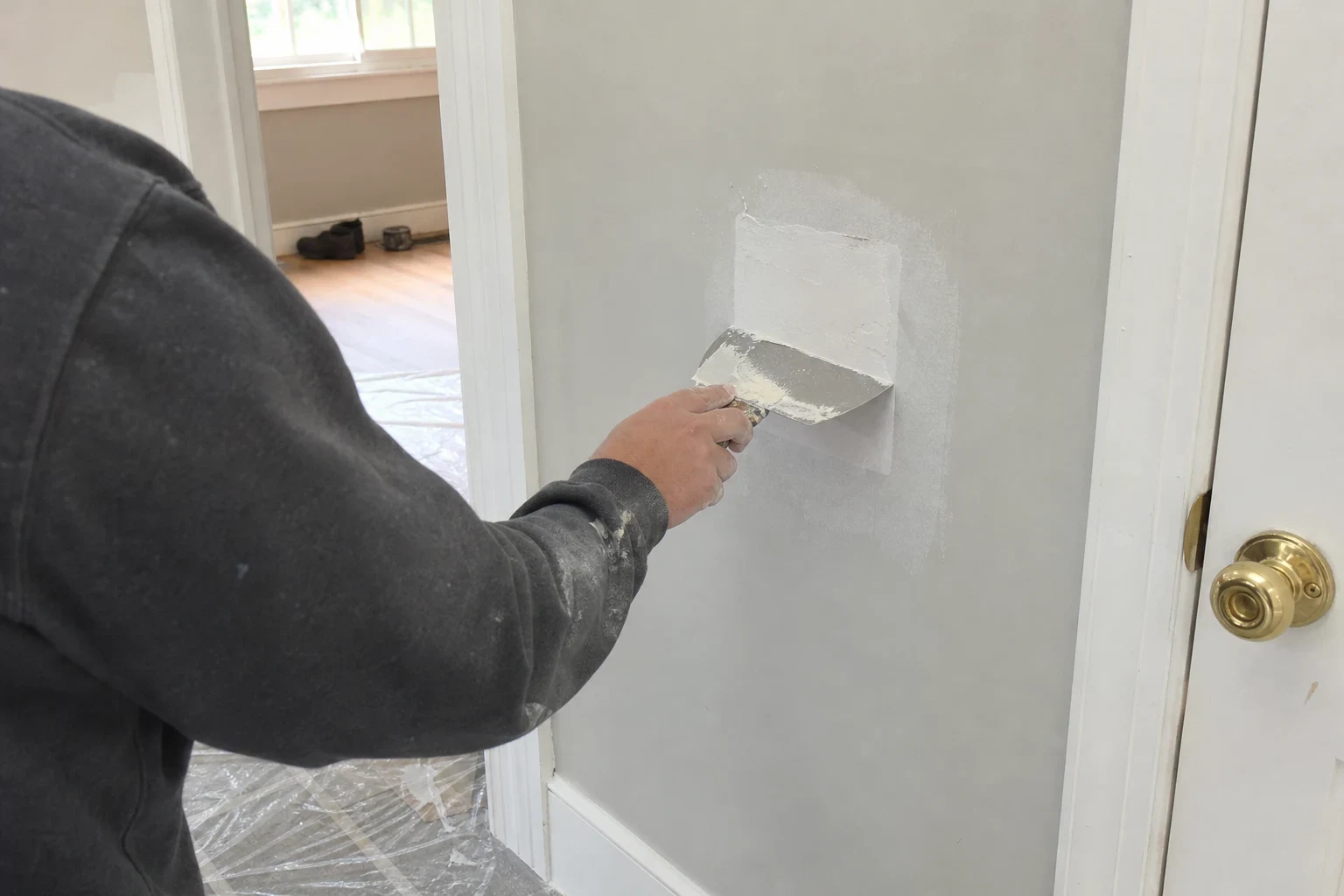
Holes from doorknobs, wall anchors, old fixtures or access cuts, patched, taped and sanded smooth so the wall looks whole again.
Drywall Hanging
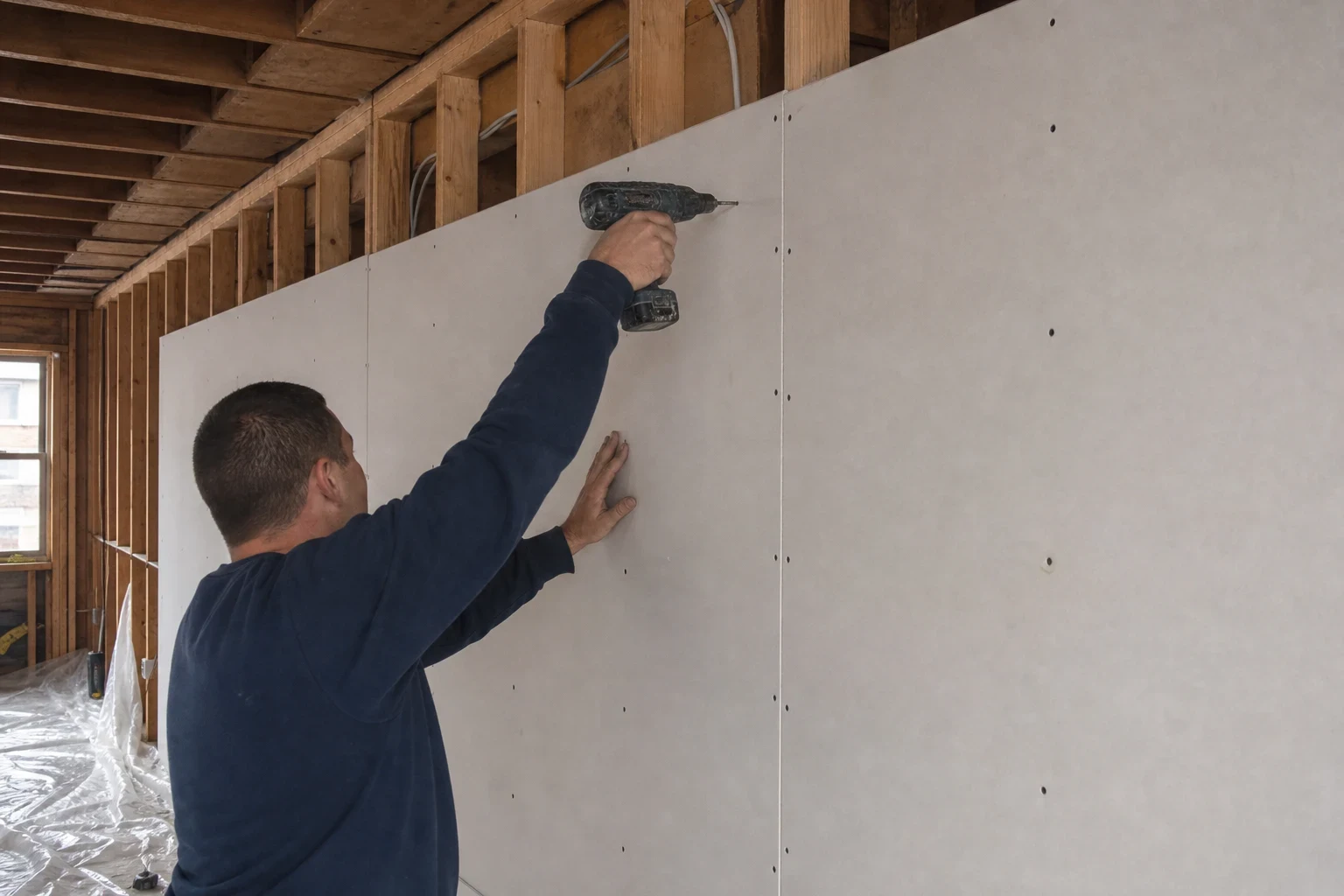
New sheets hung tight to the framing with the right board for each room, ready for taping and a smooth finish.
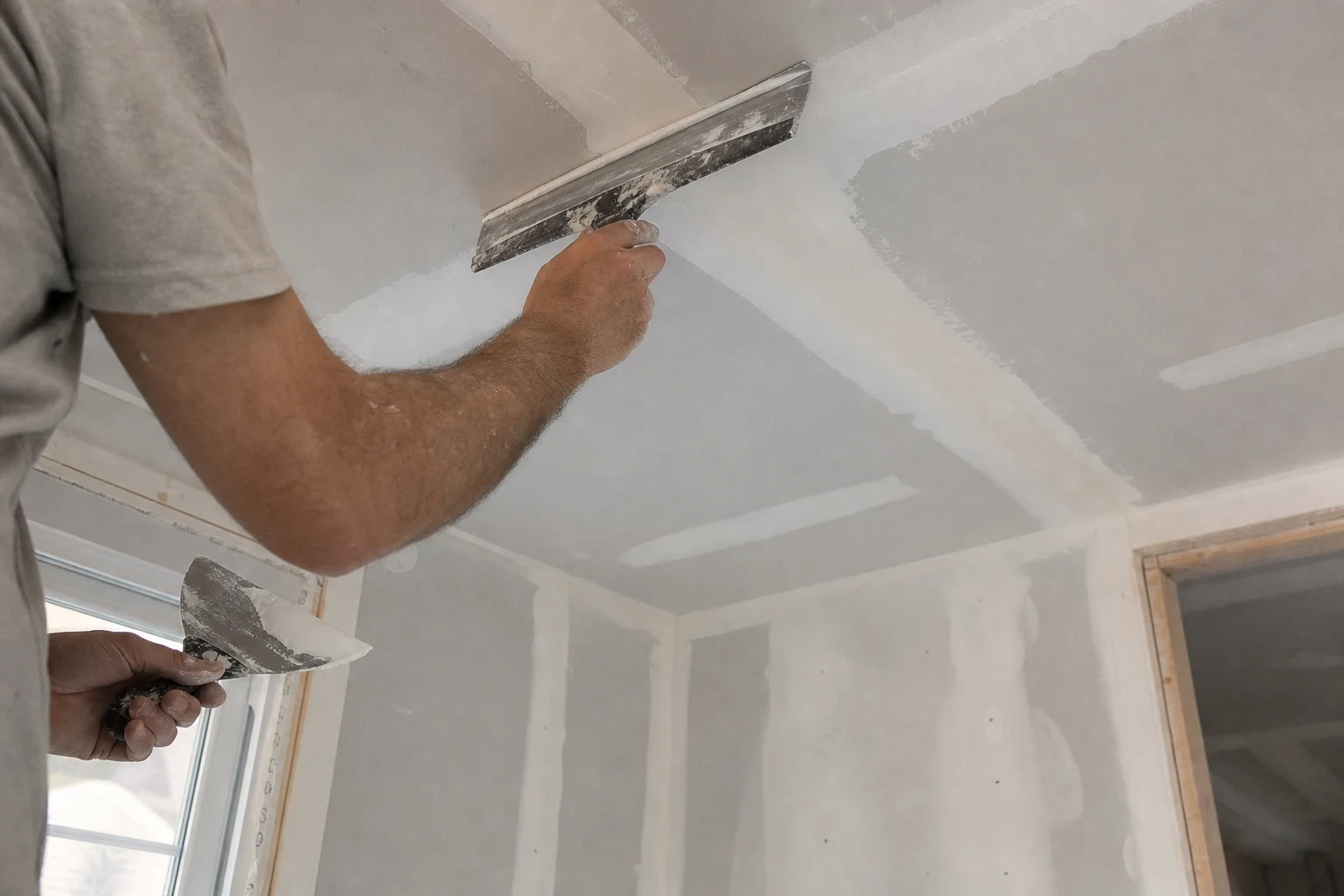
Drywall Finishing
Taping, coating and sanding new or patched drywall so seams, screws and corners disappear once the paint goes on.
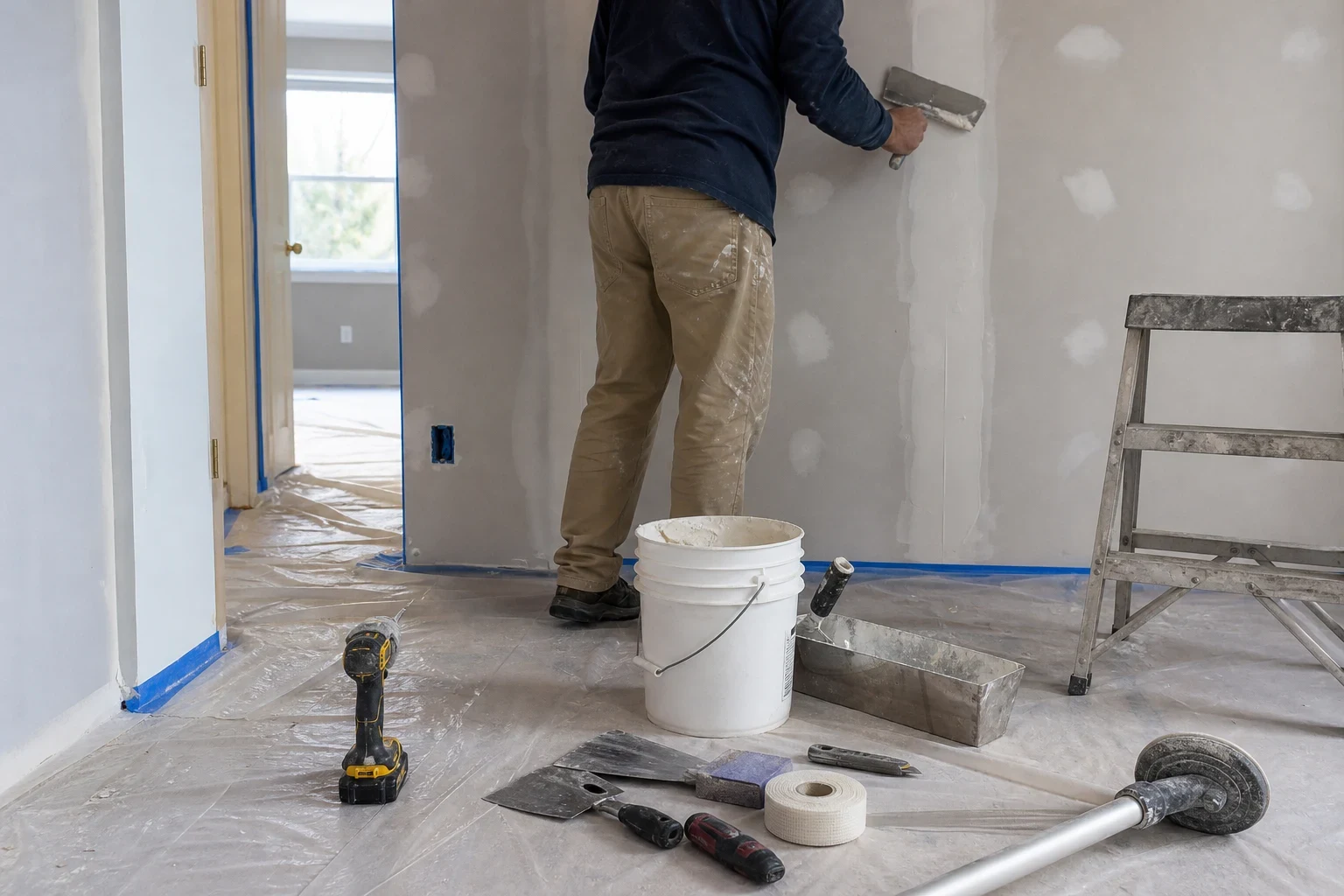
Wall Repair
Cracks, dents, holes and stains in drywall or plaster walls fixed and blended in, with replacement suggested only when a repair won't hold.
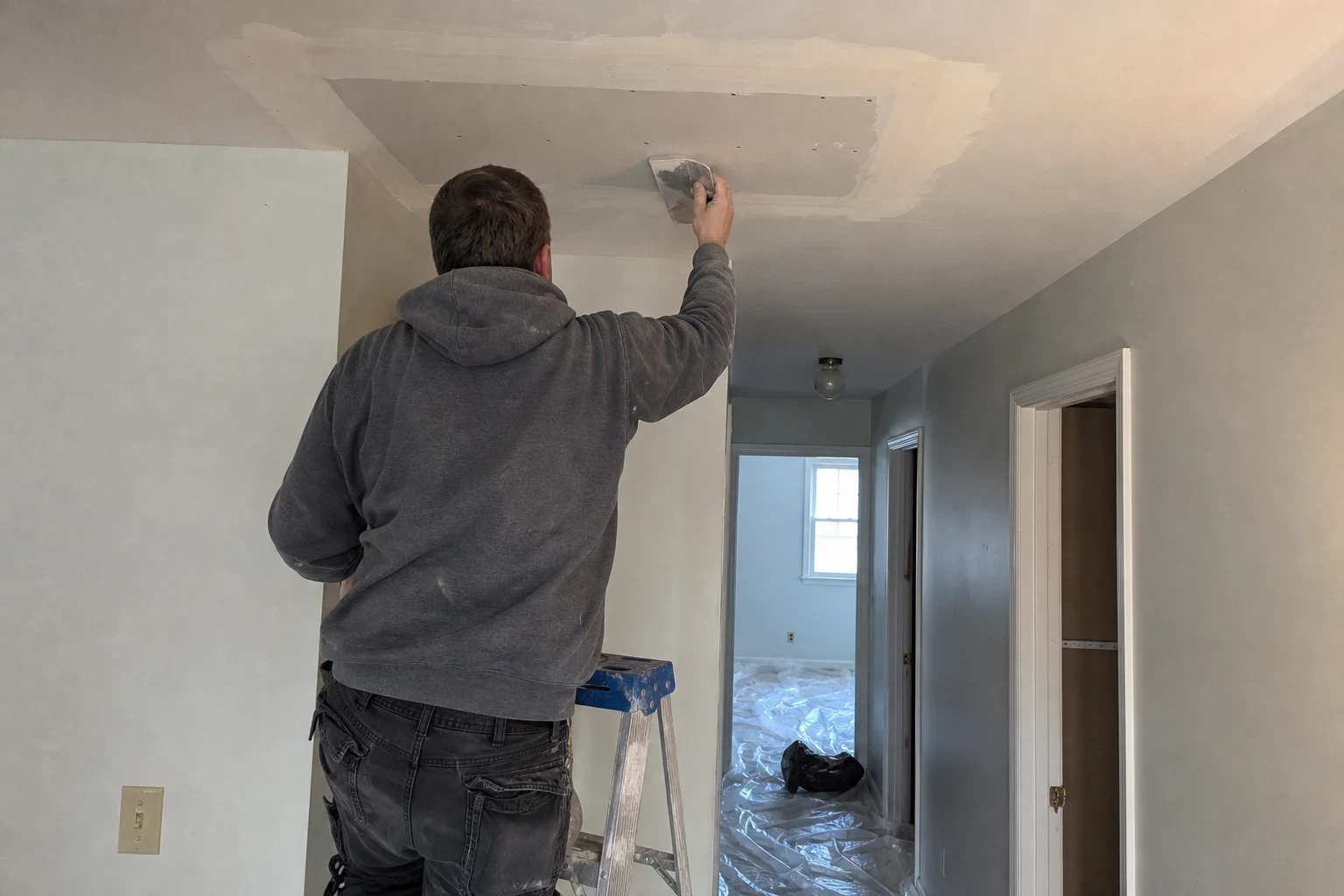
Ceiling Repair
We fix cracked, stained and sagging ceilings, match the texture and leave the room clean, cutting out panels only when a repair will not hold.
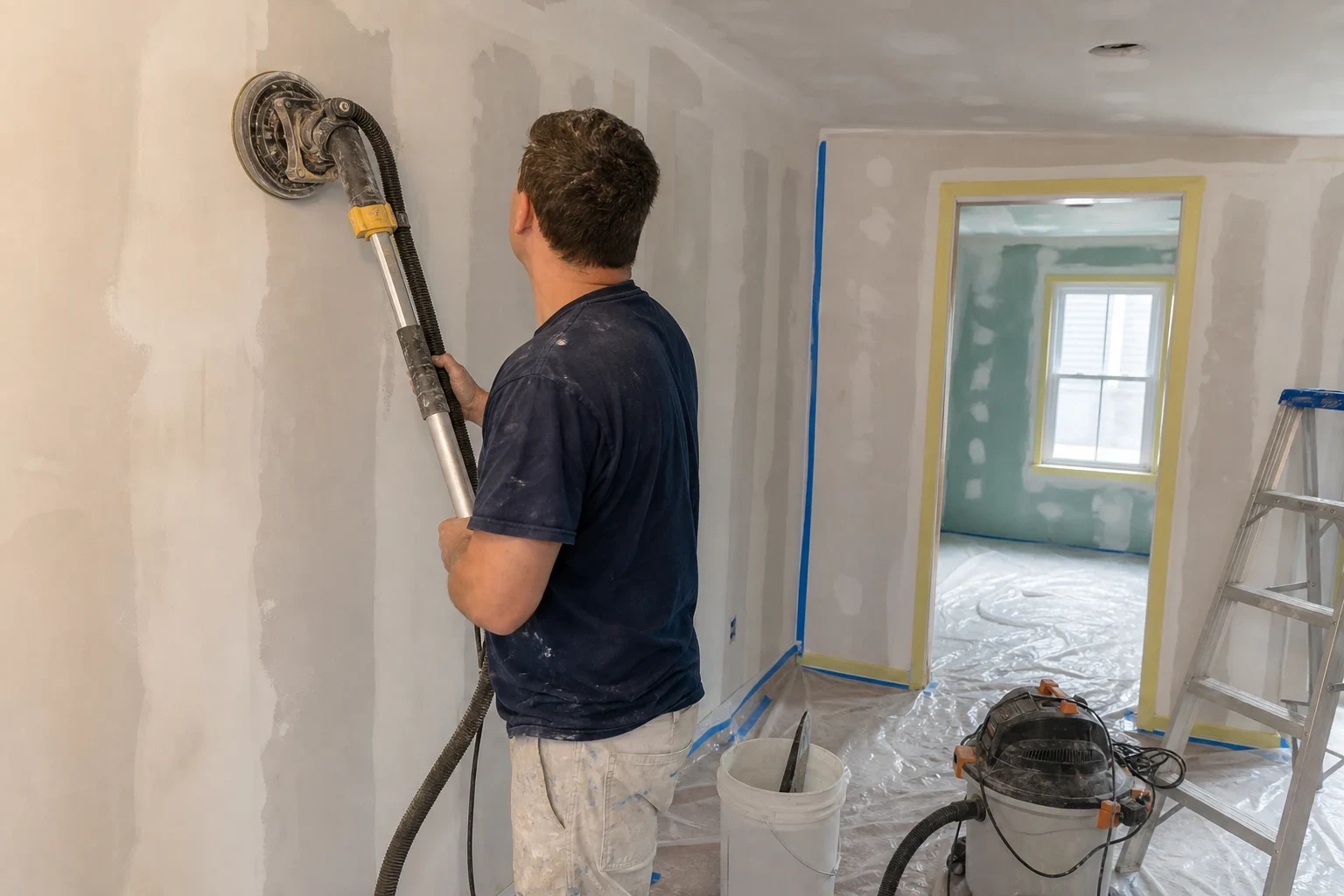
Surface Prep and Sanding
We fill, prime, skim and sand walls and ceilings so old patches, seams and torn paper stop showing through the finish.
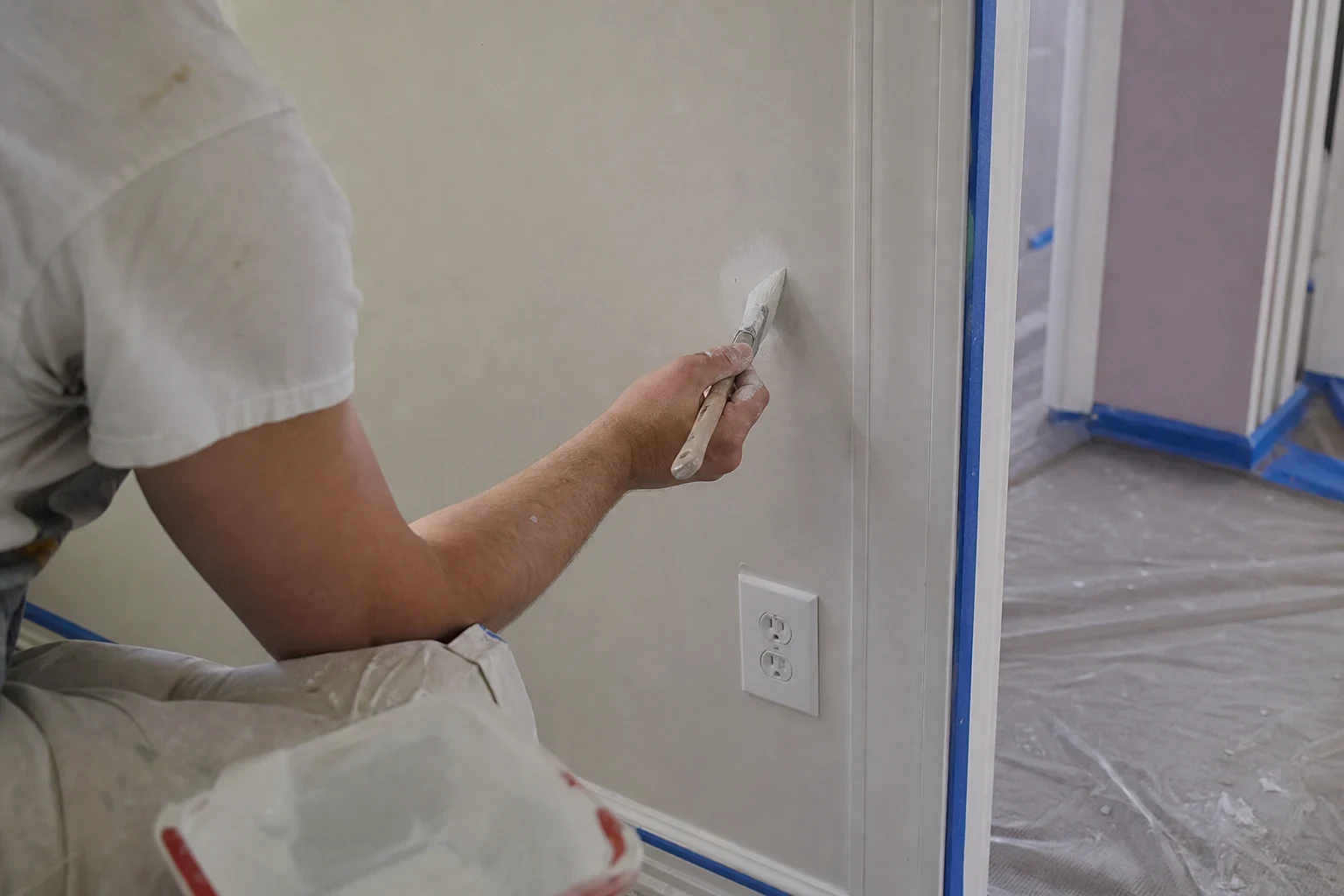
Paint Touch-Ups
We prime patches, match your color and sheen, and feather small paint repairs so scuffs, nail holes and fresh drywall patches stop showing.
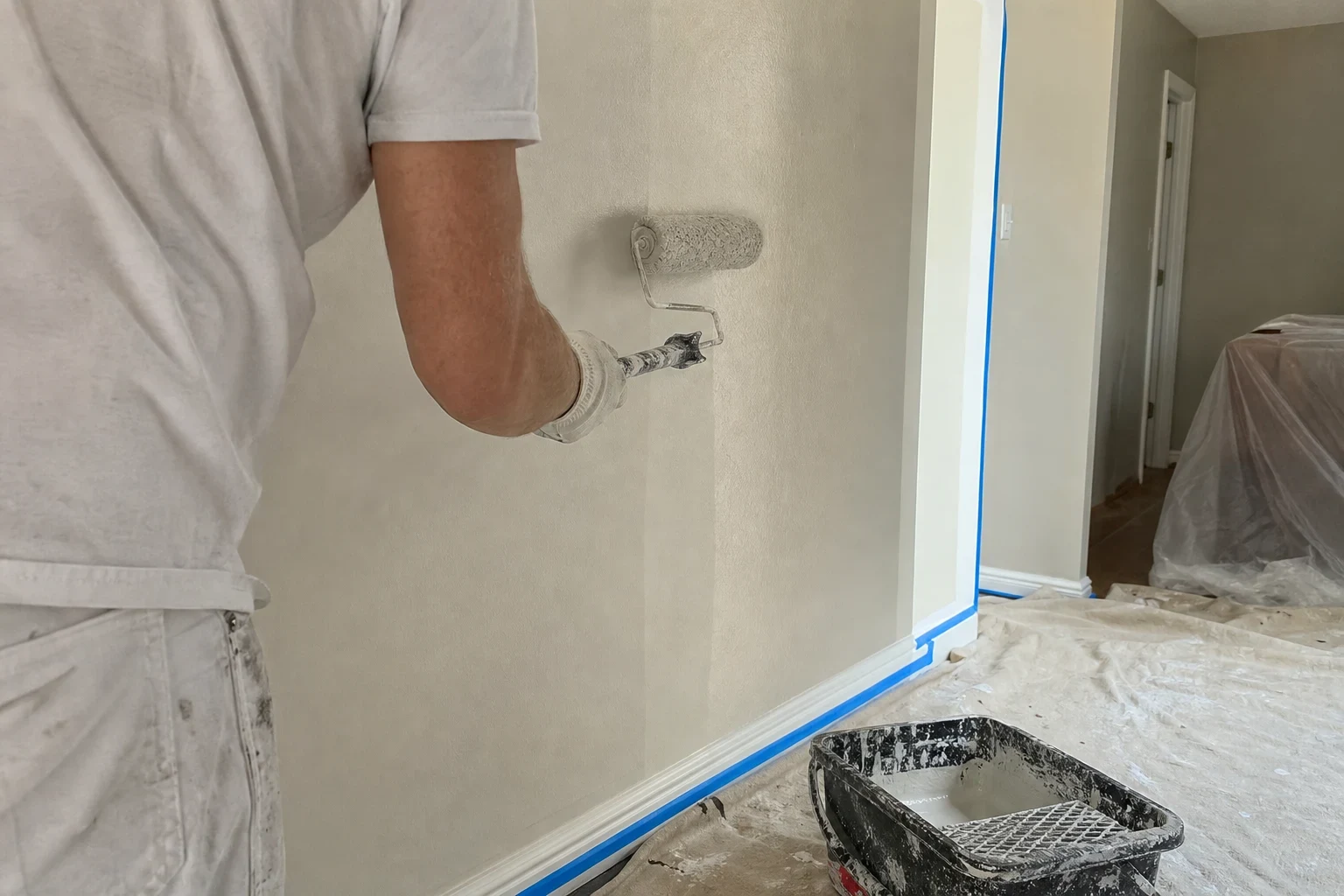
Paint-Ready Wall Prep
Getting a room ready for fresh paint? We fix the cracks, dents and old patches first so the new color doesn't show every flaw underneath.
How a Repair Job Runs
Most repairs follow the same simple path, and you will know what comes next at every stage.
- 1
Tell us what happened
Give us a call and describe the damage: where it is, roughly how big and what caused it. We will talk it over with you and agree on a day to come out and see it.
- 2
We look and explain
At your home we check the damaged area, press on the board, look for moisture and take photos. Then we tell you plainly whether it is a patch, a partial replacement or something bigger.
- 3
Written quote, then a schedule
You get the line-item quote and decide. Once you say yes, we book the days and tell you how many visits drying time will require.
- 4
Repair, finish and blend
Floors and furniture get covered first. Each coat of compound goes on, dries and gets sanded smooth before the next, then we match the texture and finish with the paint touch-up. Before leaving, we walk through the result with you and clean up.
Where We Work
We are based in Westfield, NJ, and repair walls and ceilings throughout the surrounding towns. That includes Garwood, Cranford, Scotch Plains, Summit, Union, Roselle, Linden, Rahway, Plainfield and North Plainfield.
- Westfield
- Garwood
- Union
- Plainfield
- Linden
- Rahway
- Scotch Plains
- Cranford
- Summit
- North Plainfield
- Roselle
If your town is nearby but not listed, give us a call and we will let you know if we can reach you.
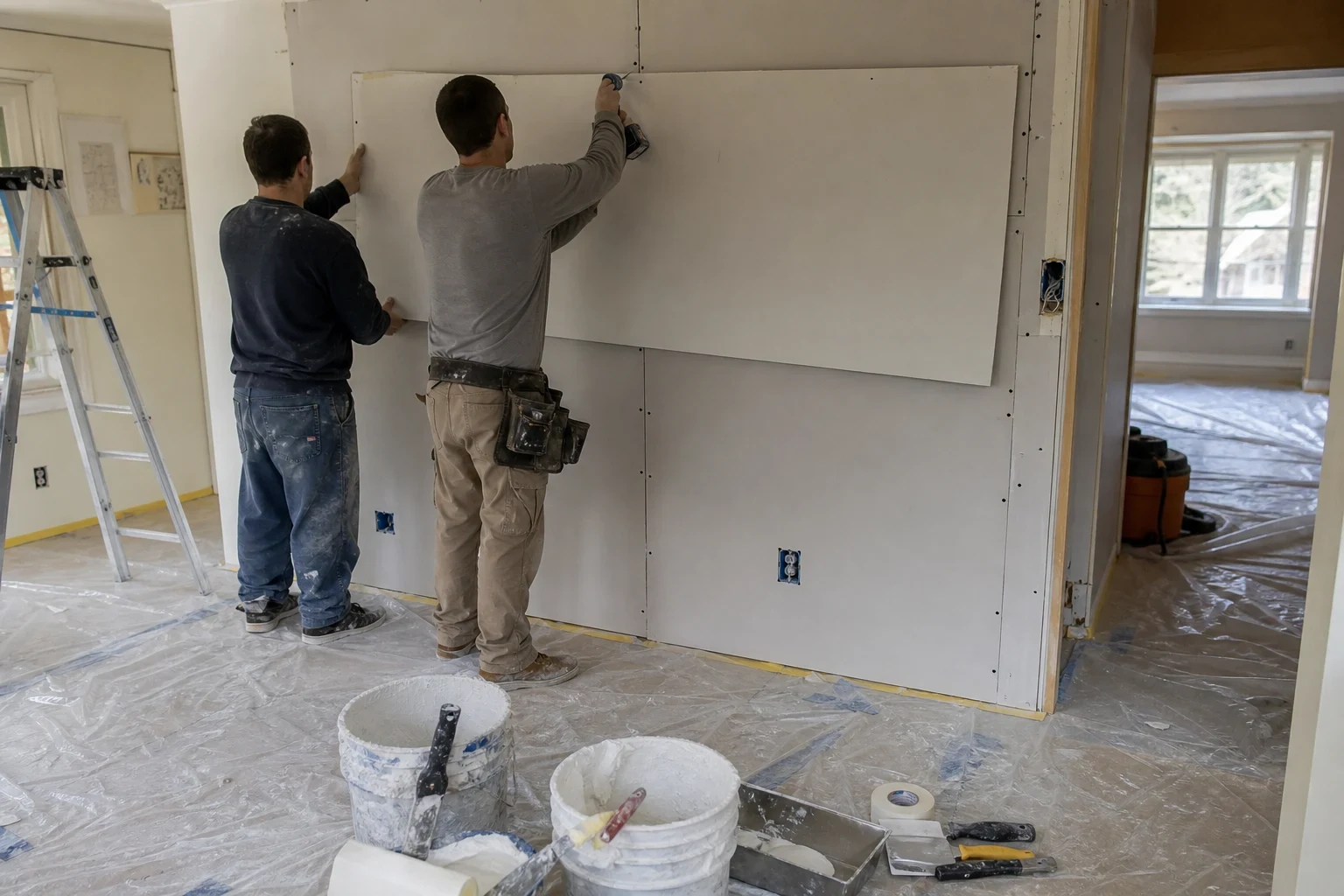
A Small Drywall Company That Fixes First
We run Drywall Repair Westfield on a simple idea: plenty of walls that get torn out only needed a careful patch. Swapping out sound drywall costs you more, makes more dust and keeps a room out of use longer. So we start with repair and suggest new board only when the old board itself has failed.
Walls in this area take a beating from seasonal swings. Humid summers and dry, heated winters make framing move, which is why nail pops and cracked corner tape show up so often. We fix the cause where we can, like re-securing loose board, so the same crack does not come back next winter.
Our customers are homeowners, landlords and property managers who want the job done properly, explained honestly and cleaned up before we go.
Questions We Hear Most
- Can you make the patch invisible?
- On most walls, yes. We feather the joint compound well past the damaged spot, sand it smooth and match the existing texture ahead of the paint touch-up. Very glossy paint or strong side lighting can make any repair harder to hide, and we will tell you up front if that applies to your wall.
- How do I know if I need repair or replacement?
- Holes, dents, cracked seams and nail pops are almost always repairs. Board that is soft, crumbling, moldy or sagging from the ceiling usually needs that section replaced. We show you what we find and explain the reasoning before you decide.
- My ceiling has a water stain. Can you fix it?
- Yes, once the leak itself has been fixed and the area is dry. We first press on the drywall to see whether it is still firm. If it is, a coat of stain-blocking primer usually keeps the mark from bleeding back through, and then we blend the paint. A soft or bowed ceiling needs the damaged piece cut out and new board put up.
- How messy is drywall work?
- Sanding makes fine dust, so we plan for it. We cover floors and furniture, mask doorways and vents, and use dust-control methods where they suit the job. We clean the work area at the end of every day, not just the last one.
- How long will the repair take?
- A few small patches can often be finished in one or two visits. Larger repairs and new drywall need several coats with drying time between each, so they usually take a few days spread out. We give you the expected schedule with your quote.
- Will you help with my insurance claim?
- Yes, within limits. We photograph the damage and write up a line-item scope of work you can pass along to your insurer. Coverage decisions belong to your adjuster, not to us, but clear records tend to make that conversation shorter and easier.
- Do you work in rental units?
- Yes. We repair walls and ceilings for landlords and property managers, including occupied units. We coordinate timing with you so tenants know when we will be there and the space stays usable.
What Shapes Your Drywall Quote
We set a price only after seeing the damage in person, because two holes of the same size can hide very different problems. Most of the gap between one quote and another comes down to the factors below. Knowing them makes your written quote easier to follow.
We look at the damage in person, then give you a written, line-item quote. Get your quote by phone to start the conversation and set up that visit.
- Size and number of areas
- One small hole is quick work. Several patches spread across rooms, or a whole ceiling section, take more material and more trips between coats.
- What is behind the damage
- Wet insulation, a cracked stud or old water staining that keeps bleeding through all add steps. We look for these first so the number on your quote holds.
- Texture and finish level
- A smooth wall under bright light needs more skim coats and sanding than a lightly textured closet. Matching an unusual hand-applied texture also takes extra time.
- Height and access
- Stairwells, cathedral ceilings and rooms packed with furniture need ladders, scaffold planks or moving time.
- Drying time between coats
- Joint compound needs to dry fully between coats. Humid summer weather can stretch a repair over an extra visit, and we plan for that up front instead of rushing it.
- Paint touch-up needs
- If you have leftover paint, blending is simpler. If the color has faded or we need to match an unknown sheen, that adds a step.
Find Out What Your Wall Really Needs
Tell us about the hole, crack or stain, and we will set up a time to look. You will get a straight answer on repair versus replacement and a written quote before any work begins.