ServicesDrywall Hanging
Drywall Hanging in Westfield
When a wall or ceiling is too far gone to fix, or you are closing in a new space, we hang fresh drywall that sits flat and stays put. We measure carefully, use the right board for each room and keep your home clean while we work.
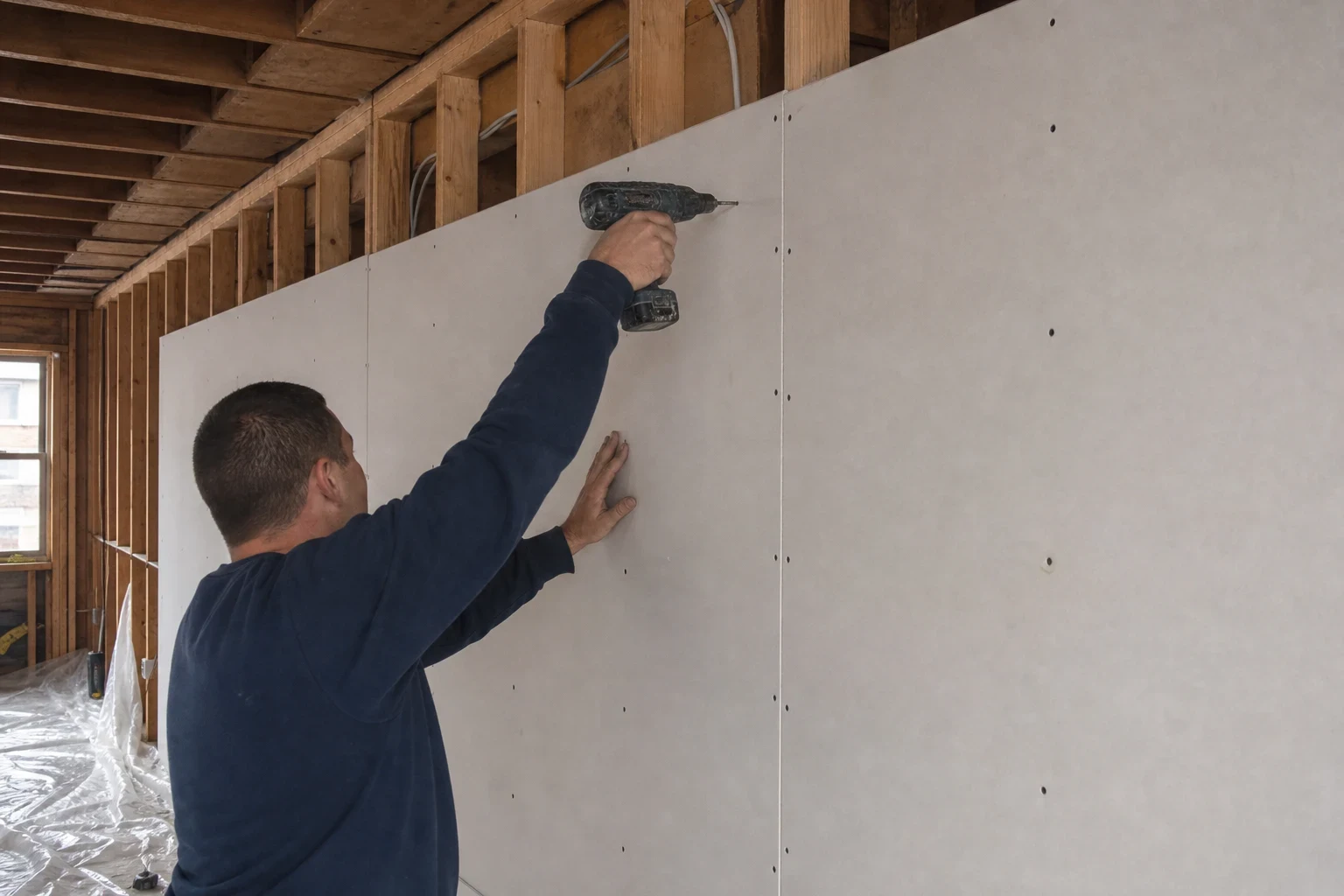
New Drywall When Repair Is Not Enough
Most damaged walls do not need new sheets. A dent, a doorknob hole or a cracked seam is usually a job for drywall repair or drywall patching, and we will tell you so. Hanging new drywall makes sense when the damage is spread across a whole section, the board has gone soft from water, or there is simply no wall there yet.
That covers a lot of real situations: a basement you are finishing, a wall opened up for wiring, a ceiling that sagged after a leak, or old plaster in an older house that has let go from its lath. In each case we look at what is behind the surface first, because new board is only as good as the framing it is fastened to.
What Our Drywall Hanging Covers
Measuring and layout
We plan sheet layout to cut down on seams and keep joints off the corners of doors and windows, where cracks tend to start later.
The right board for the room
Standard board for living areas, moisture-resistant board for bathrooms and basements, and fire-rated board where code calls for it, such as a garage wall shared with living space.
Checking the framing
Before anything goes up, we check studs and joists for straightness and add blocking where needed. A bowed stud shows through new drywall, so we deal with it first.
Fastening done properly
Screws set at the right spacing and depth, snug without tearing the paper face. That is what keeps nail pops from showing up a season later.
Cutouts and corners
Clean cuts around outlets, switches, vents and fixtures, with corner bead on outside corners so edges stay straight and hold up to bumps.
Cleanup each day
Scraps hauled out, floors swept and a clean work area left behind. If you want us to carry on into taping and a smooth, paint-ready surface, our drywall finishing service picks up right where hanging ends.
Signs You Need New Drywall, Not a Patch
Soft or crumbling board
If drywall feels spongy or breaks apart when pressed, water has gotten into the gypsum core. That board will not hold a patch and should come out.
A ceiling that sags
A ceiling bowing between joists usually means the board has absorbed water or lost its fasteners. Replacing that section is the safe fix.
Mold behind the surface
Staining that keeps coming back, or a musty smell from one wall, often means the paper backing is affected. Once the moisture source is fixed, the damaged section should be replaced.
Plaster pulling away
Older walls where plaster has loosened from the lath can sometimes be stabilized, and we will look at that first. When large areas have let go, hanging drywall over or in place of it is often the better long-term answer.
Open framing
A new room, a finished basement or a wall opened for electrical work needs new sheets, plain and simple.
How a Drywall Hanging Job Goes
- 1
Start with a phone call
Describe the damage or the space you are building out. We check a couple of details, like the size of the area and how we get sheets inside, then pick a day to see the room in person.
- 2
We look and give a straight answer
We check the damage and the framing behind it. If a repair will do, we say so. If new drywall is the right call, you get a clear written estimate with each part of the work listed.
- 3
We set up a clean work area
Before the first sheet comes in, we lay drop cloths over your flooring, shift or cover anything near the wall, and hang plastic across doorways so dust stays in the room we are working in.
- 4
We hang the board
Damaged material comes out, framing is checked and corrected, and new sheets go up, ceilings first and then walls, so the edges meet cleanly.
- 5
We clean up and walk you through it
We leave the space swept and show you the finished hang. From there we can move on to taping, sanding and finishing, or hand it off at whatever point you choose.
What Affects the Cost of Hanging Drywall
Most of the price comes down to the square footage of new board and the effort it takes to carry sheets in and fasten them to the framing. Every part of the job is spelled out in writing, so you can see where your money goes before work begins.
- Size of the area
- Square footage drives material and labor. A single ceiling section costs far less than a full basement.
- Ceilings and height
- Ceilings take more time and sometimes a lift or extra hands. Tall walls and stairwells need staging, which adds to the job.
- Type of board
- Sheets made for damp rooms or for fire separation carry a higher material price than ordinary gypsum board. In some rooms code requires them, and in others they are simply the sensible choice.
- What is behind the wall
- Removing wet board, old plaster or correcting crooked framing adds time. We will show you what we find before doing extra work.
- Permits and finish level
- Some projects, like finishing a basement, may need a permit. Whether you want us to stop at hanging or carry through to a full finish also changes the total.
Drywall Hanging Questions
Something not covered here? (908) 641-7101
Can you just patch my wall instead of replacing it?
Often, yes. If the damage is limited and the board is dry and solid, drywall patching costs less and disrupts less. We only suggest new drywall when a patch would not hold or would cost nearly as much.
What kind of timeline should I expect for a room of new drywall?
Getting the sheets up is usually the quicker part of the job for an average room. Taping and finishing stretch things out, since every coat of compound has to dry before it can be sanded. Your written estimate includes a realistic schedule so you can plan around it.
What board do you use in a bathroom or basement?
We use moisture-resistant board in those areas because they see more humidity. It holds up much better than standard sheets where dampness is likely.
Will there be a lot of dust?
Hanging makes less dust than sanding, though cutting sheets does throw off some. We put down floor protection, close off doorways with plastic and sweep up before we leave each day, so the other rooms in your home stay usable while the work is underway.
Do you work outside Westfield?
Yes. Along with Westfield, we hang drywall in nearby towns including Cranford, Scotch Plains, Garwood and Summit. Ask when you reach us and we will confirm your area.
Can new drywall be matched to my existing walls?
Yes. We match board thickness so the new section sits flush, and during finishing we work on texture matching so the repair blends with the rest of the room.
Ready to Close Up That Wall?
Tell us what you are working with and we will give you an honest take on repair versus new drywall. Then we will set a time to look at the space.