ServicesDrywall Patching
Drywall Patching in Westfield
A hole from a doorknob, a TV mount or an old cable box doesn't mean a new wall. We cut it clean, set a solid patch, then tape, mud and sand until the spot blends in. If the damage is too wide for a patch, we'll tell you plainly.
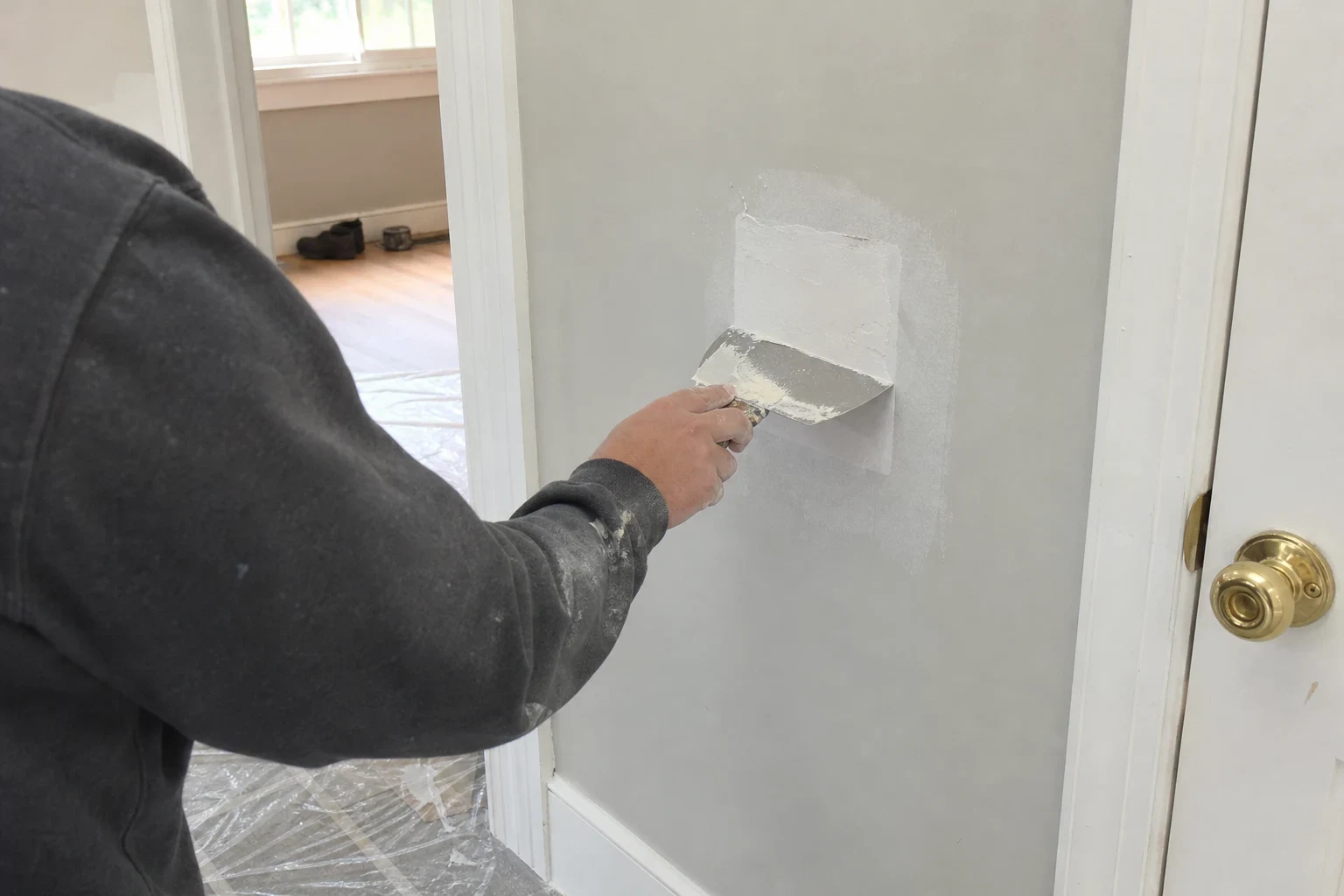
When a patch is the right fix
Most damaged drywall only needs a patch. If the hole is contained, the board around it is dry and firm, and the studs behind it are sound, patching saves you the cost and mess of pulling down a full sheet. That's the answer we give in most homes, because it's usually the honest one.
Patching is more than a dab of spackle. Small dings get a mesh or setting compound fill. Larger openings get a new piece of drywall cut to fit, backed with wood blocking or screwed to a stud, then taped and finished in thin coats. Done that way, the patch won't crack along its edges or sink months later.
When a patch isn't enough, such as soft or crumbling board, wide cracks that keep coming back, or damage spread across most of a wall, we'll explain why and point you toward our drywall repair or wall repair work instead.
What our drywall patching covers
Squaring up the damage
We cut ragged or torn edges back to clean, solid gypsum. A neat square opening takes a patch far better than a crumbled one.
Backing and a fitted piece
For anything bigger than a fist, we add backing strips or fasten to the nearest stud, then screw in a new piece of drywall that matches the wall's thickness.
Tape and thin coats of compound
Seams get paper or mesh tape and two or three coats of joint compound, feathered wide so there's no ridge you can see in side light.
Sanding and texture matching
We sand each coat smooth and, where your wall has a light texture or orange peel, match it so the patch doesn't stand out as a flat spot.
Primer and a clean work area
The patched area gets a coat of primer so fresh compound won't flash through later. We cover floors, contain dust and vacuum before we leave.
Signs a wall needs a patch
A doorknob hole
A door swung too hard leaves a round dent or punch-through. A doorstop helps afterward, but the hole needs a real patch first.
Holes left by anchors and mounts
Taking down a TV bracket, shelving or a curtain rod often pulls out chunks of gypsum along with the anchors.
Openings from old fixtures
Moved outlets, removed thermostats, old phone jacks and access cuts leave square holes that a simple fill won't cover.
Dents and gouges from moving day
Furniture corners and dollies tear the paper face. Torn paper bubbles under paint unless it's cut out and patched properly.
An earlier patch showing through
A visible outline, a hump or hairline cracks around an old repair usually means it was filled without tape. We redo it the right way.
From first call to a smooth wall
- 1
Start with a quick conversation
Give us a rough count of the holes, their sizes and the rooms they're in. That lets us bring the right board, backing and compound on the first trip.
- 2
Look before we cut
At your home we check that the board around each hole is dry and firm and see what sits behind it. If the damage points to a bigger problem, you'll hear that before any work starts.
- 3
Patch, tape and coat
We protect the floor, set backing and new drywall, then apply tape and the first coat. Compound needs drying time, so larger patches often take a second short visit.
- 4
Sand, match and prime
Once coats are dry, we sand, match texture and prime. You're left with a smooth, ready-to-paint wall and a swept, vacuumed room.
What affects the cost of a patch
A patching job is priced by the work it really takes, not a flat guess. We'll walk you through what we see and what it means for your price before we start.
- Size and number of holes
- Several small anchor holes in one room take far less time than one large opening that needs backing and a cut-in piece.
- Wall or ceiling
- Overhead patches are slower and need ladders or staging. Bigger ceiling damage is better handled as ceiling repair.
- Texture and finish
- Smooth walls are straightforward. Textured surfaces take extra steps to match so the patch blends.
- What's behind the wall
- Plaster and lath, common in older Westfield-area homes, and nearby wiring or pipes change how we cut and fasten the patch.
What people ask us about patching
Something not covered here? (908) 641-7101
Once the wall is painted, can anyone tell it was patched?
That's exactly what we work to avoid. Compound gets spread well beyond the edges of the hole, each coat is sanded before the next, and any texture is matched to the wall around it. Shiny paint shows small flaws more than a flat finish does, so if your walls are glossy, we'll mention it up front.
Do you paint over the patch?
We prime every patch so it's ready for paint. If you'd like the color blended in too, our paint touch-ups service covers that, and we can plan both for the same visit when it makes sense.
How many days until the wall is done?
A handful of nail or anchor holes is usually wrapped up in a single trip. Bigger patches need each coat of compound to dry overnight before we can sand it, so expect us back the next day or soon after. You'll know the timeline before we begin.
Can you patch plaster walls?
Often, yes. Small holes in plaster can be patched with drywall and setting compound. If the plaster is loose from the lath over a wide area, we'll explain why a larger wall repair is the better choice.
Is it cheaper to patch or replace the whole sheet?
For contained damage, patching nearly always costs less and makes less mess. Replacing a full sheet makes sense when the board is soft, crumbling or damaged across much of the wall, and we'll show you what we found if that's the case.
Ready to make that hole disappear
Tell us what you're looking at and we'll explain whether a patch will do it. We work in Westfield and nearby towns like Cranford, Garwood and Scotch Plains.