ServicesDrywall Repair
Drywall Repair in Westfield
A doorknob hole, a crack that keeps coming back, a stain from an old leak. We look at the damage, tell you plainly whether a repair will hold, and fix it so the wall looks like nothing happened. Replacement comes up only when it is the better choice.
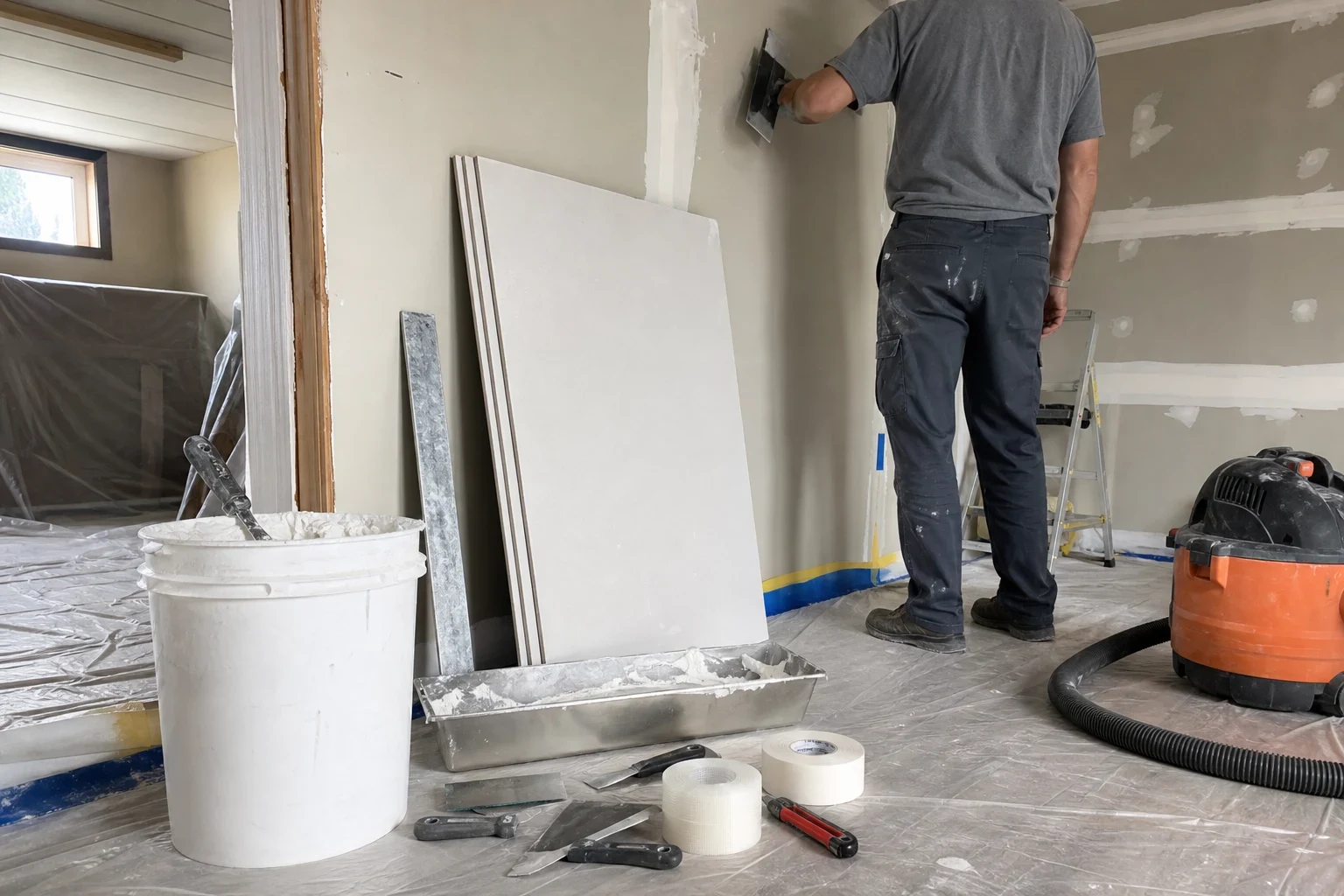
Fixing the Damage You Have, Not Selling You More
Most damaged drywall does not need to come down. A dent, a hole or a cracked seam can usually be cut back to solid material, patched, taped and finished so it blends with the rest of the wall. That is where we start every job.
Sometimes a repair is the wrong answer. Drywall that stayed wet long enough to go soft, crumble or grow mold has lost its strength, and patching over it only hides the problem. When we see that, we show you what we found and explain why cutting out a larger section or replacing the sheet will serve you better.
Many older homes around Westfield have a mix of original plaster and newer drywall, so we check what your wall is made of before deciding how to fix it. That way the repair matches the surface around it.
What Our Drywall Repair Covers
- Holes of every size
- Small nail and anchor holes get filled and feathered. Larger holes from doorknobs or furniture get a backed patch or a new piece of drywall screwed to blocking so it stays flat.
- Cracks and failed seams
- We open up cracked tape joints, remove loose tape and compound, and re-tape with fresh mud. Stress cracks above doors and windows get reinforced so they are less likely to return.
- Popped screws and nails
- Fasteners that push through the surface get reset or swapped for drywall screws, then covered and sanded smooth.
- Water-damaged sections
- Once the leak has been fixed and the area is dry, we cut out stained or soft drywall back to sound material and install a new section.
- Texture matching and blending
- Smooth, orange peel, knockdown or a hand-applied finish, we match what is already on your wall so the patch does not stand out under light.
- Primer and paint touch-up
- Bare compound and an already painted wall take paint in different ways, so an unprimed patch can show up as a dull spot. We seal each repair with primer. If you kept the original paint, we can handle the paint touch-up as well.
Signs Your Walls Need Drywall Repair
A crack that keeps reopening
If you have filled the same crack more than once, the seam underneath has likely failed. It needs new tape, not another layer of filler.
Bubbling or peeling tape
Tape that lifts or blisters usually means it was not bedded well or got damp. It will keep loosening until it is cut out and redone.
Soft spots or brown stains
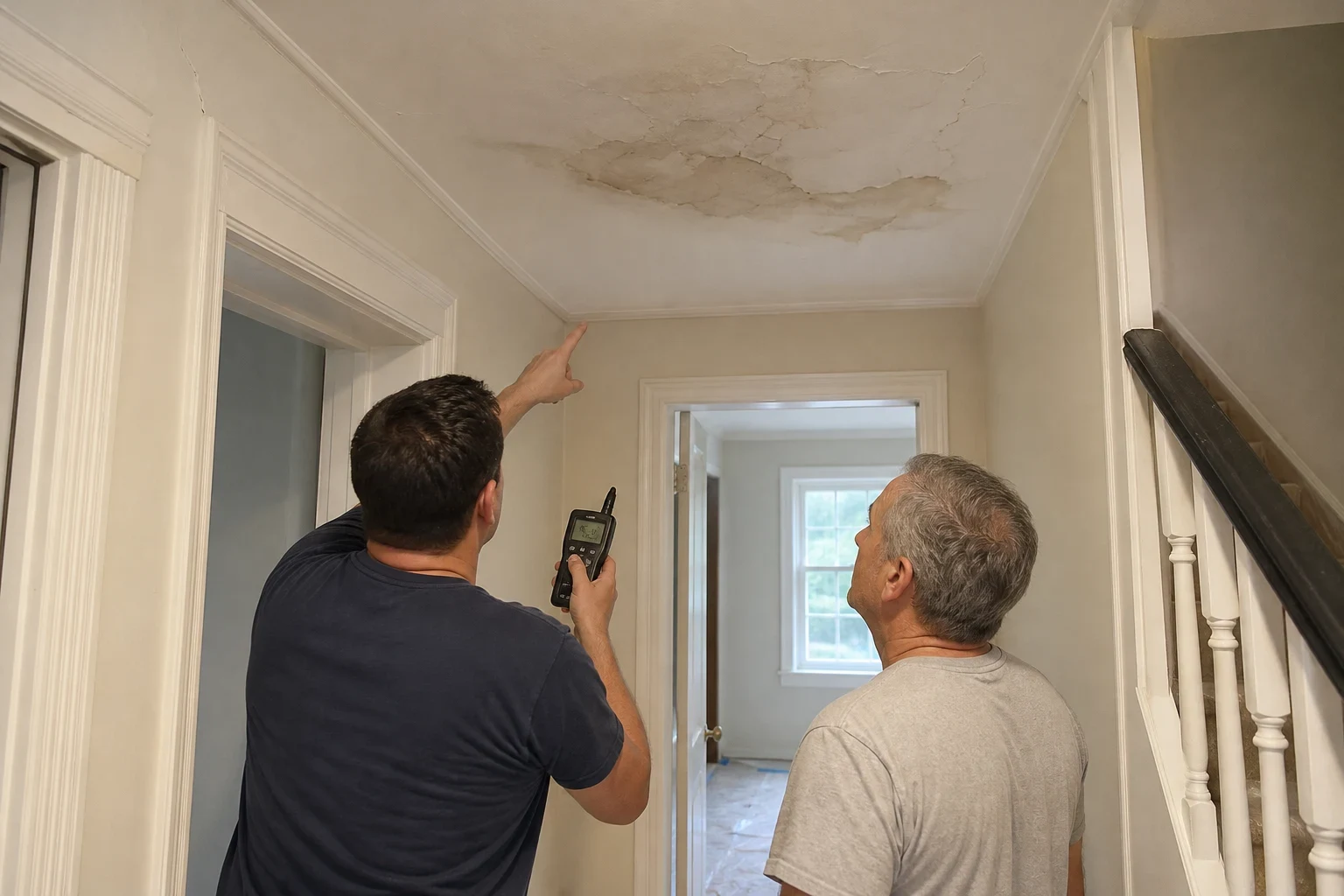
Stains and spongy drywall point to moisture. Press gently near the stain; if it gives, that section should come out once the source is dry.
Round bumps in rows
Small circles popping up in a line are screws or nails backing out. They are a quick fix but tend to multiply if left alone.
Holes from moving or past repairs
Furniture dings, removed shelves and old patches that never blended in all leave a wall looking tired. They are among the simplest things we fix.
How a Repair Day Goes
- 1
A look at the damage
We check the wall, find what caused the problem and tell you whether a repair will last. If replacement makes more sense, we explain why before any work starts.
- 2
Protecting your home
We lay drop cloths, move what needs moving with your OK, and cover nearby floors and furniture. Dust is part of drywall work, so we keep a clean work area as we go.
- 3
Cut, patch and tape
Damaged material comes out to solid edges. New drywall or a patch goes in, then tape and the first coat of compound.
- 4
Coats, sanding and texture
Each coat needs time to dry, so many repairs take more than one visit. We sand between coats, match the texture and prime the area.
- 5
Cleanup and walkthrough
We vacuum, pick up debris and walk you through the finished wall under normal room light.
What Moves the Price of a Drywall Repair
We are happy to talk through the damage by phone, and the firm number follows once we know what the wall really needs. Your quote lays out the work involved in plain terms. If a smaller fix will solve the problem, we tell you that up front.
- Size and number of repairs
- One small hole and a dozen spread across several rooms are very different jobs. Grouping repairs into one visit often makes better use of drying time.
- How deep the damage goes
- Surface dents need compound and sanding. Water damage or broken drywall needs cutting out, new material and more finishing coats.
- Texture and finish
- Smooth walls need careful sanding to hide the patch. Matching an older or hand-applied texture takes more time and testing.
- Location and access
- Stairwells, high walls and tight closets take longer to set up and work in safely.
Drywall Repair Questions
Something not covered here? (908) 641-7101
Can you patch my wall or does the whole sheet need to come out?
Most of the time a patch is the right call. We suggest a new full sheet when the drywall is soft, moldy, cracked in many places or sagging off the studs. We show you what we see so you can make the decision with us.
Once it is painted, will the patch show?
We work to make it disappear. The compound gets feathered out well past the damage, the texture is matched and the area is primed. Wall paint that has faded or yellowed with age can still give a patch away, and we will point that out before we start so you know what to expect.
How long does drywall repair take?
Small repairs may be done in one visit. Larger repairs usually need a second or third visit because each coat of compound has to dry before sanding and the next coat.
My ceiling has a water stain. Is that drywall repair too?
It is, and we take care of it. Working overhead calls for extra support behind the new piece and more care with falling dust, which is why we give it its own page under Ceiling Repair. Before any new drywall goes up, whatever caused the stain has to be stopped and the area left to dry out fully.
Do you work outside Westfield?
We also work in nearby towns such as Cranford, Garwood, Scotch Plains and Summit. Give us a call and we will let you know if your home is in our area.
Let's Take a Look at That Wall
Tell us what happened and where the damage is. We will talk through whether a repair makes sense and set up a time to see it.