ServicesPaint Touch-Ups
Paint Touch-Ups in Westfield, NJ
After a drywall repair, the patch is only half the job. We prime it, match your color and sheen, and feather the paint so the spot disappears into the wall. When a spot is unlikely to blend, you hear that from us first, before any paint goes on.
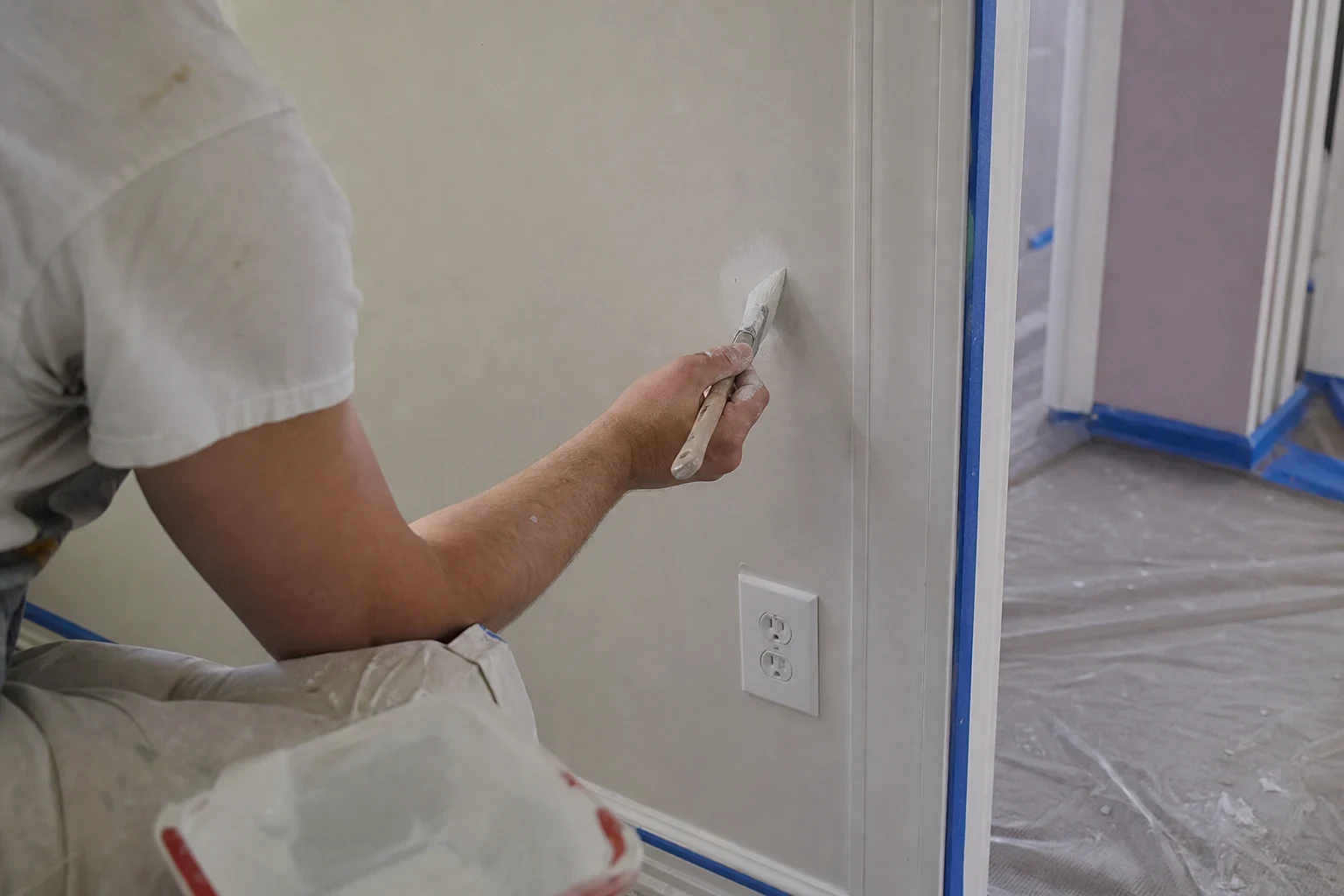
Small paint work, done so it doesn't show
A paint touch-up covers a small area instead of a whole wall: a fresh drywall patch, a scuffed hallway, nail holes left after pictures come down, or a spot where tape pulled the paint off. Done well, you can't find it. Done poorly, you get a shiny square that shows every time the light changes.
We would rather fix a spot than redo a wall, and touch-ups are where that matters most. Most walls can be spot-fixed. Some can't, such as paint that has faded for years, flat paint that has been scrubbed often, or a color nobody can identify. In those cases we explain why a touch-up will likely show and let you decide how to handle the wall.
What our paint touch-up work includes
- 01
Priming new patches
Fresh joint compound soaks up paint differently than old paint does. We seal every patch with primer first, so the topcoat dries with an even sheen that matches its surroundings.
- 02
Finding your color
A leftover can or its label is the easiest starting point. Without one, we take a small chip from an out-of-sight spot to be matched, then try the mix on your wall before painting anything else.
- 03
Getting the finish right
Wall paint runs from dead flat to fairly glossy, and each level catches the light in its own way. A finish that's a step too shiny or too dull is easier to spot than a color that's a shade off, so we check what's on your wall before we pick the paint.
- 04
Feathering and roller technique
We roll out past the repair and thin the edges, using a roller nap close to what went on the wall originally. That way the texture of the paint film matches, not just the color.
- 05
A clean work area
Drop cloths go down, nearby furniture gets moved or covered, and we take everything with us when we leave.
Questions about Paint Touch-Ups?
Call(908) 641-7101Signs your walls need a paint touch-up
A patch that's still bare
Maybe an earlier repair was left in primer or plain white compound. It needs matched paint to finish the job.
Scuffs that won't wash off
Hallways, stairwells and the spot behind a desk chair take a beating. When scrubbing starts to polish the paint, a touch-up looks better than more cleaning.
Holes from shelves, TVs and frames
Taking things down leaves holes and anchors behind. We fill, sand and touch up so the wall is ready for whatever goes up next.
An old touch-up that flashes
If a past repair looks shiny or dull in daylight, the finish probably didn't match or the spot was painted without primer. We can often correct it without redoing the whole wall.
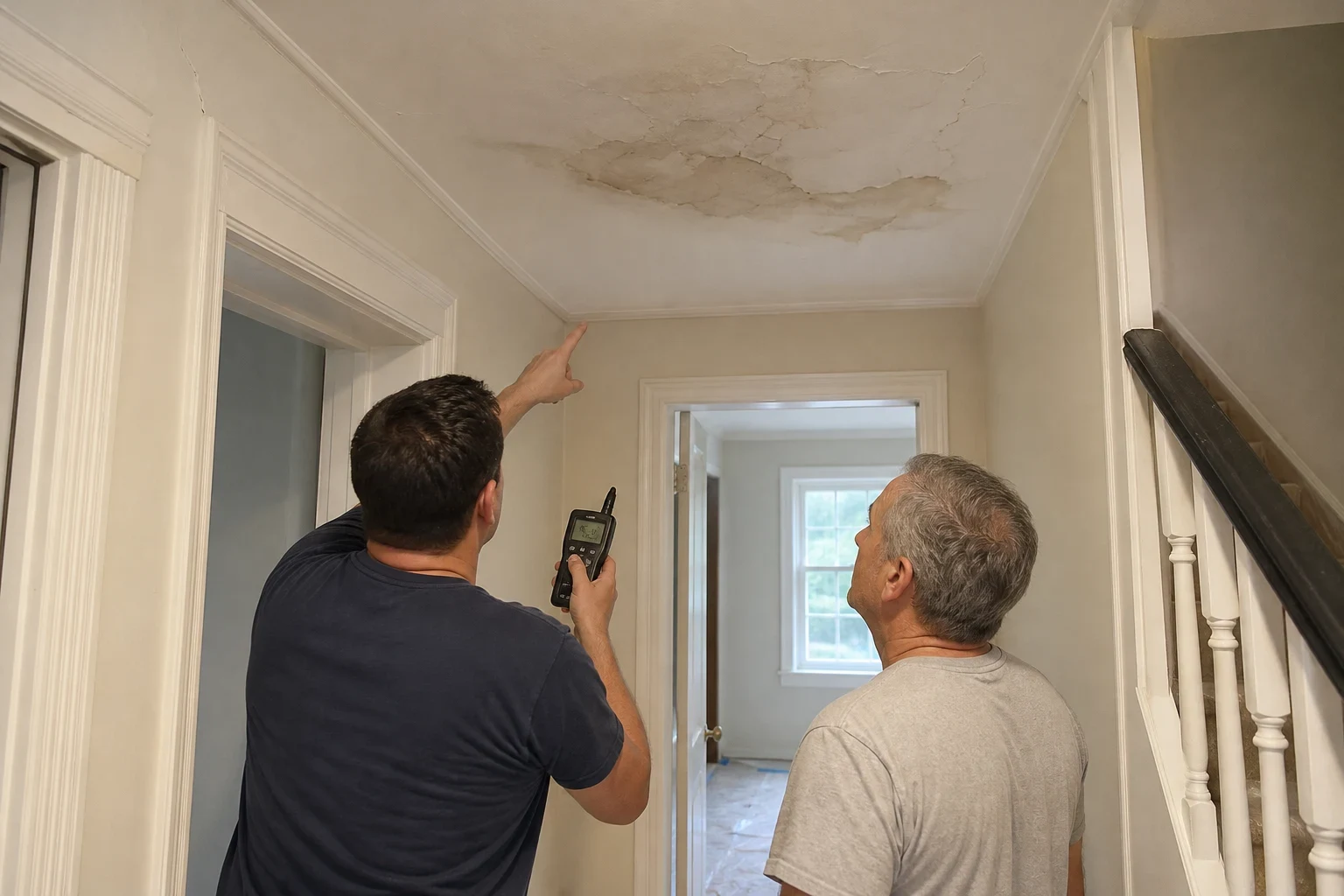
A faint stain after a leak was fixed
Once the source is repaired and the drywall is dry, a stain-blocking primer keeps the mark from bleeding back through the new paint.
How a touch-up visit goes
- 1
Look and talk it through
We look at the spots in person, check the age and sheen of the paint, and ask what you have on hand. You'll get an honest answer on whether a touch-up should blend.
- 2
Prep the surface
Holes and dings get filled and sanded smooth, dust gets wiped off, and patches get primed. Rougher areas that need more than light sanding fall under our surface preparation and sanding work.
- 3
Test the color
We paint a small test area and let it dry, because wet paint always looks different. Only once it matches do we move on.
- 4
Paint and feather
We apply thin coats, feather the edges and check them from a few angles, including in the daylight coming through your windows.
- 5
Clean up and walk through
We pick up drop cloths, wipe down anything that got dusty, and look at the finished spots with you before we go.
What affects the cost of paint touch-ups
Touch-up pricing depends mostly on how many spots there are and how much work each one needs before paint goes on. Two walls rarely need the same thing, so we don't post set prices. After we've seen the area, we walk you through a written estimate that shows what each part covers.
- Number and size of spots
- A handful of nail holes in one room is quick. Scattered scuffs across several rooms take more time, setup and paint.
- Whether you have the paint
- Leftover paint with its label saves a step. Matching an unknown color means a chip, a mix and a test before any real painting.
- Repair work underneath
- A spot that only needs paint costs less than one that needs filling first. Larger damage is usually handled as drywall patching or drywall repair, then touched up.
- Height, sheen and access
- Ceilings and tall stairwell walls need ladders and more setup than a hallway at eye level. Glossy paints show every mark, so they take extra care.
Paint touch-up questions
Will the touch-up really be invisible?
Most of the time, yes, as long as the color and sheen are matched and any patch is primed. The hardest walls are flat paint that has faded or been washed a lot. If we think a spot will show, we'll say so before we start, not after.
The leftover paint is long gone. Is a match still possible?
In most cases it is. We send a small chip from somewhere hidden, like inside a closet, to be color matched, then brush a sample on your wall and wait for it to dry. Very old or custom-mixed colors are harder, and we'll tell you plainly if a close match looks doubtful.
Why does my last touch-up look shiny?
That's called flashing. It happens when the sheen is wrong, when paint goes over bare compound without primer, or when it's brushed on thicker than the original roller coat. Priming and rolling with a matching nap usually fixes it.
Do you touch up ceilings too?
Yes. Ceilings are usually flat white, which is forgiving on color but shows roller lines easily, so we feather wide. If there's a crack or sagging area, that's covered on our ceiling repair page.
How soon can I use the room again?
Small touch-ups are usually dry to the touch fairly quickly, and you can walk through and use the room right away. Paint takes longer to fully cure, so we'll tell you when it's safe to wipe the wall or hang things back up.
Ready for walls without the marks
Give us a quick description of the spots and which rooms they're in. We'll ask about your paint, then pick a time to come see them, in Westfield and nearby towns like Cranford, Garwood and Scotch Plains.