ServicesSurface Prep and Sanding
Surface Preparation and Sanding in Westfield, NJ
Most rough, patchy walls do not need new drywall. They need careful filling, priming and sanding. We fix what is already there, keep the dust contained, and tell you plainly if a section is too far gone to save.
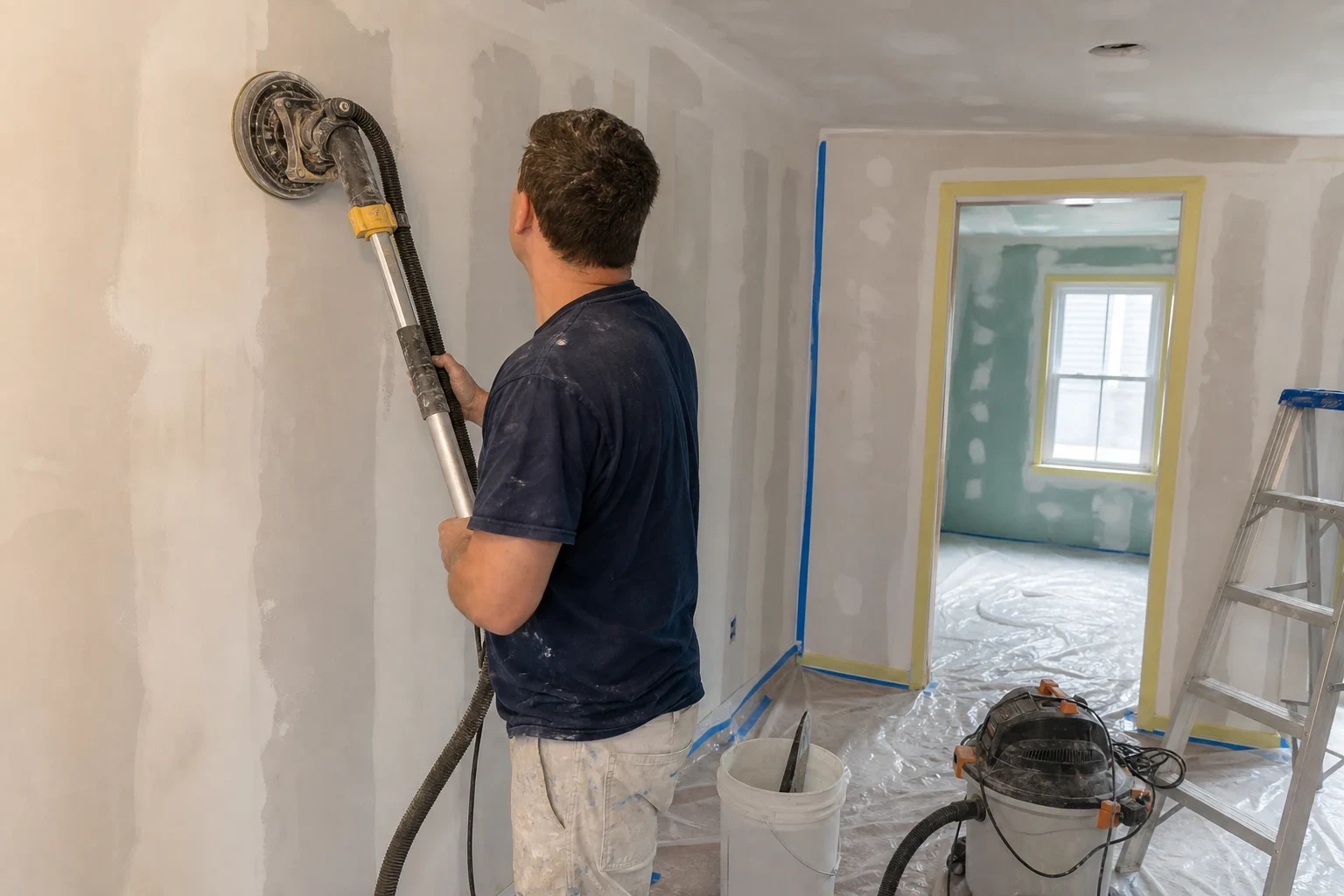
Good paint starts with a flat wall
Paint does not hide problems. It shows them. A sheen of fresh paint picks up every ridge at a seam, every old patch and every dimple from a hasty repair. Surface preparation is the slow, unglamorous work of making the drywall flat and sound ahead of any finish, and it is where most of the final look is decided.
Our habit is to repair before we replace. Torn face paper can be sealed and skimmed. Rough texture from a past bad job can be knocked down and sanded smooth. Only when the gypsum core is soft, stained through from old water, or crumbling at the edges do we suggest cutting out a section, and we show you the damage so you can see the reason for yourself.
What our prep and sanding covers
- Filling holes and dings
- Nail holes, anchor holes, furniture dings and small gouges get filled with joint compound, left to dry fully, then sanded flush with the surrounding wall.
- Sealing torn paper
- When the brown paper under the surface layer is exposed, mud put straight on it will bubble. We seal it first with a primer made for torn drywall paper, then skim over it.
- Skim coating rough areas
- Walls with ridges, old roller texture or a patchwork of repairs get thin coats of compound spread wide and sanded between coats until the surface reads as one plane.
- Feathering old patches
- A patch that shows usually has a hard edge. We widen the compound past the edge so it blends into the wall instead of sitting on top of it.
- Sanding with dust control
- We sand with fine grit and vacuum-attached tools where we can, with plastic sheeting over doorways and floors so the dust stays in the work area.
- Low-angle light check
- Our last step on each wall is a work lamp held close to the surface and aimed along it. The glare throws shadows into dips and ridges that ordinary room lighting hides, so we can fill them while the tools are still out.
Signs your walls need prep first
Patches show through the paint
You can see a dull or shiny square where a hole was filled. That is usually unprimed compound or an edge that was never feathered out.
Torn paper after wallpaper came off
Stripping old wallpaper often pulls up the drywall's face paper, leaving fuzzy brown patches that will blister under paint.
Ridges along seams
Long raised lines at tape joints catch light from windows and lamps, and they get more obvious after a fresh coat.
Screw heads and nail pops
Small round bumps or cracked circles mean fasteners have backed out. They need resetting and refinishing so the wall is smooth again.
Rough or uneven texture
Sand marks, roller stipple or lumpy compound from an earlier repair make the wall look tired no matter what color goes over it.
How a prep and sanding job runs
- 1
We talk it through first
You tell us what the walls look like and what is going on them next. We ask about the age of the paint, because walls painted prior to 1978 may carry lead, and we bring up testing ahead of any sanding.
- 2
We protect the room
Furniture moves to the center or out of the room and gets covered. Floors are covered, doorways are sealed with plastic, and vents in the work area are closed off.
- 3
We repair, prime and fill
Fasteners get reset, torn paper gets sealed, and holes and seams get compound. Compound has to cure between layers, so some rooms are spread across more than one visit.
- 4
We sand and check
Sanding brings each repair flush, then the low-angle light shows us anything left to fix. We would rather add a coat than leave a low spot you notice later.
- 5
We clean up and hand it back
Dust is vacuumed from floors, sills and trim, plastic comes down, and the walls are left ready for primer and paint. If small areas need it, our paint touch-ups service can finish them.
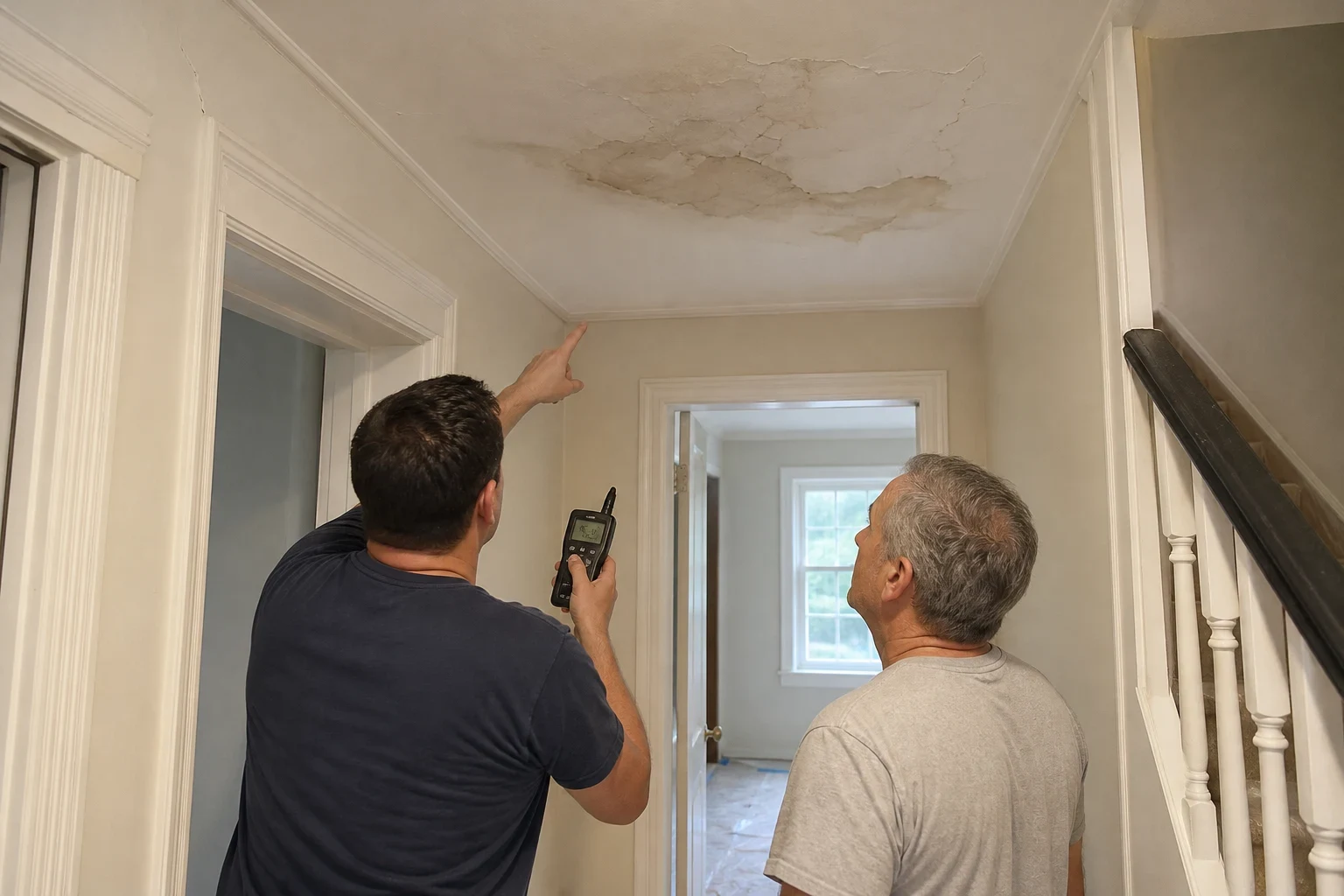
What affects the cost of prep and sanding
Prep work is priced by how much repair the surface needs, not just how big the room is. A wall with a dozen nail holes and a wall with torn paper from floor to ceiling are very different jobs. We look at the actual condition and walk you through the reasons behind the number when you get your quote by phone or after a visit.
- Condition of the surface
- Spot filling is quick. A full skim coat over damaged paper or heavy texture takes several thin coats and much more sanding.
- How many coats and drying time
- Compound has to dry fully between coats. Deeper repairs mean more coats, and more coats can mean an extra trip.
- Ceilings and height
- Overhead sanding is slower work, and tall stairwells or vaulted ceilings need ladders or staging set up safely.
- Room setup and access
- Rooms full of furniture, built-ins or tight spaces take longer to protect and work around.
- Older paint
- If testing shows lead in old paint, the work has to be handled differently, and that changes the scope.
Questions about surface prep and sanding
Something not covered here? (908) 641-7101
How much dust will there be?
Drywall compound turns to a very fine powder when sanded, and we set up with that in mind. Plastic goes up over doorways, drop cloths go down over floors and furniture, and we hook our sanders to a vacuum wherever the surface allows. A faint film can still settle near the work area, so we vacuum and wipe surfaces at the end of each visit.
Can my walls be sanded smooth, or do they need new drywall?
Most of the time they can be saved. Torn paper, old patches and rough texture are surface problems that filling, priming and sanding can fix. If the core is soft, water-stained through or crumbling, we will show you and explain why replacing that section with drywall repair or drywall hanging makes more sense.
Do I need to leave the house while you work?
Usually not. We keep the work to the rooms involved and seal them off, so you can go about your day in the rest of your home. Pets and anyone sensitive to dust are best kept away from the work area until cleanup is done.
How long does it take?
A room that only needs light filling is often ready in a single day. Skim coats and torn-paper fixes take longer, usually spread over a few separate visits, since the compound must be bone dry before we sand it and lay on the next layer. Once we have seen the walls, we give you an honest schedule.
Is this different from drywall finishing?
They overlap. Drywall finishing is taping and mudding new board to a smooth surface. Surface preparation is getting existing walls ready, fixing what years of use or a past repair left behind.
Ready for walls that look flat under paint
Tell us what you are seeing on your walls or ceilings. We will explain what can be repaired, what it involves and how we keep your home clean while we do it.