ServicesCeiling Repair
Ceiling Repair in Westfield
A cracked seam, a brown water ring or a sagging spot overhead is hard to ignore. We find out why it happened, repair what can be saved, match the surrounding texture and leave your room clean. If a section truly needs to come out, we explain why first.
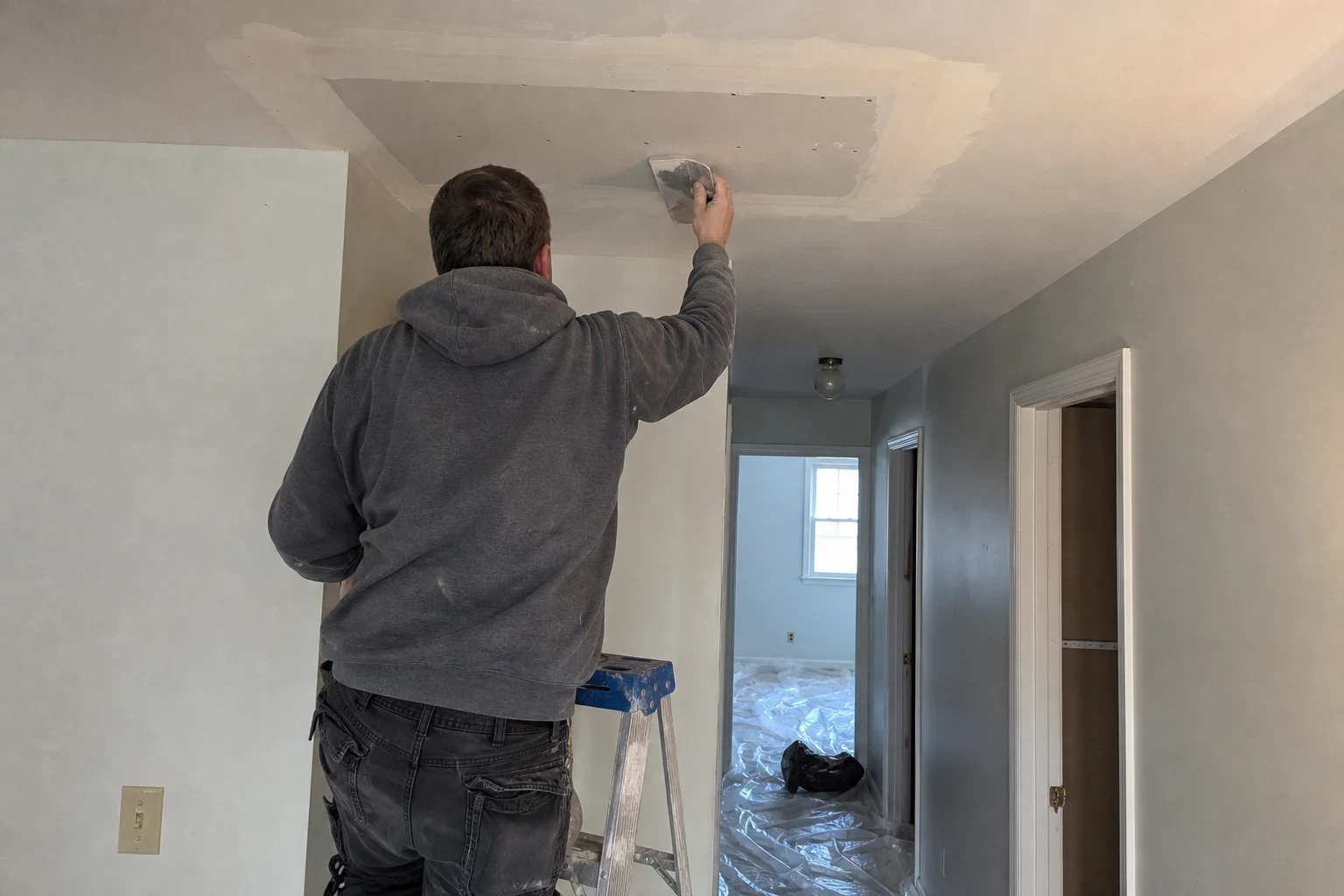
Fixing the ceiling you have, when it makes sense
Most ceiling damage is smaller than it looks from the floor. A crack along a taped seam, a few popped nails or a stain from an old leak can usually be repaired without tearing anything down. Our first job is to look closely, press on the area and tell you plainly whether a repair will last.
Sometimes it will not. Drywall that has soaked through and gone soft, or a panel that has pulled away from the joists and keeps dropping, needs to come out. In that case we cut back to solid material, hang new drywall and blend it into the rest of the ceiling so the fix does not stand out.
Plenty of homes around Westfield still have original plaster ceilings, and those need a different hand than modern drywall. We work with both and will tell you which approach suits yours.
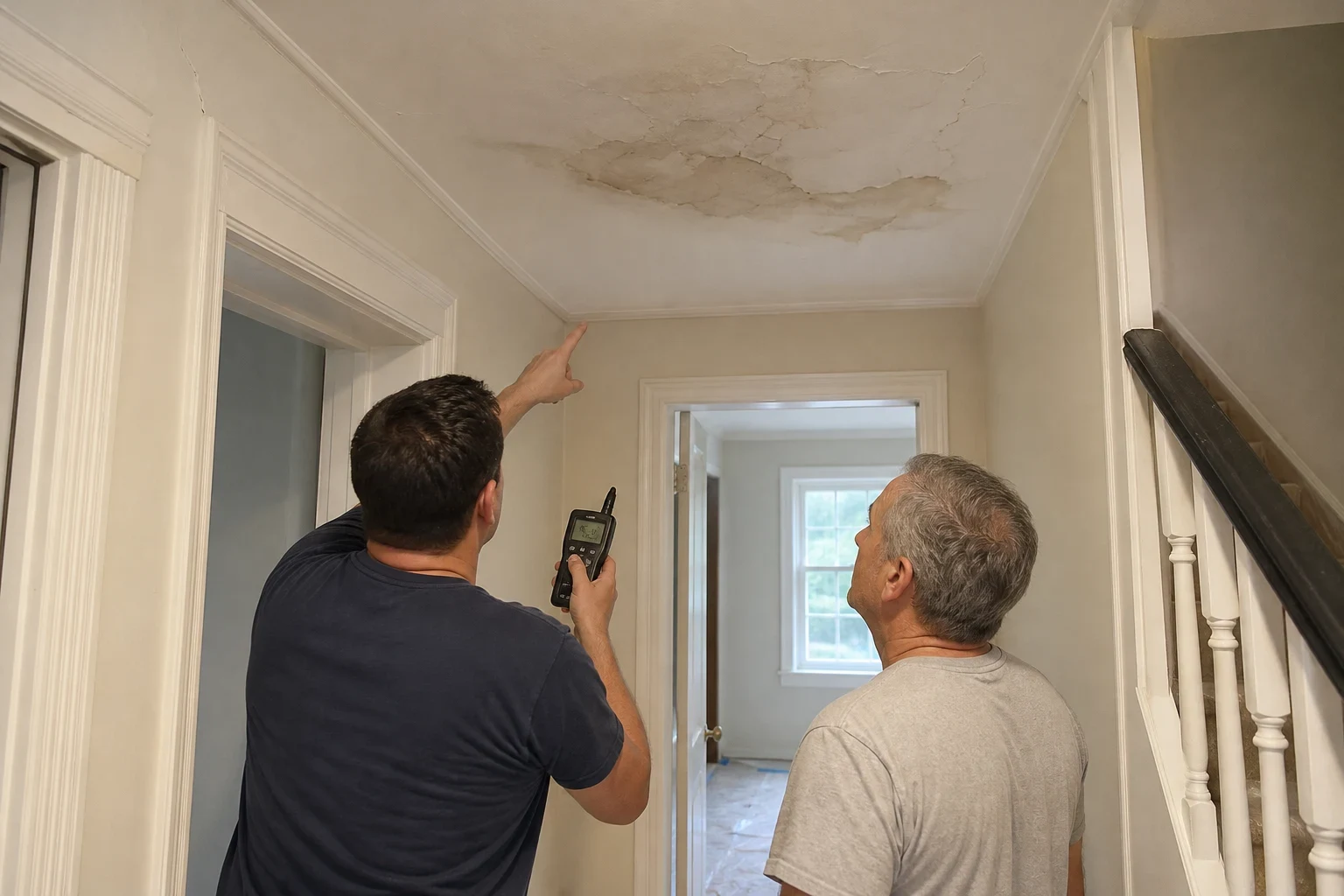
What our ceiling repair covers
- 01
Crack and seam repair
We cut open failed tape joints, bed new tape in compound and spread each coat a little wider than the last, so the seam fades into the ceiling around it. Hairline cracks get the same treatment, because a thin skim over a moving seam just cracks again.
- 02
Water stain and damage repair
We start this work only after the source of the water has been dealt with and the board has had time to dry out. Then we test the drywall for softness. Firm board gets a stain-blocking primer and finish work; soft or crumbling board gets cut out and new drywall goes in.
- 03
Sag and nail pop correction
We re-fasten loose panels to the framing with screws, set popped nails, and fill and sand each spot.
- 04
Texture matching
Knockdown, orange peel, swirl or smooth, we build up texture in thin layers until the patch blends with the rest of the ceiling. Popcorn texture can be matched or the repaired area can be smoothed, depending on what you prefer.
- 05
Prep and paint touch-up
After sanding, we prime the repair and can handle the paint touch-up so you are not left with a bright white square overhead.
Questions about Ceiling Repair?
Call(908) 641-7101Signs your ceiling needs attention
A brown or yellow ring
Stains usually mean water got in at some point. Even if it has stopped, the board underneath may be weak, so we check it first rather than simply covering it.
Cracks that keep coming back
A crack that returns after being painted over points to a loose seam or a panel that is moving. It needs to be re-taped or re-fastened, not just filled.
A dip or bulge you can see
Sagging means the drywall is pulling away from the joists, often from moisture or old fasteners giving up. It is worth having looked at soon, while the panel can still be saved.
Small round bumps in rows
Those are nail pops. They are a simple fix and a common one in rooms that see seasonal swings in humidity.
Peeling or bubbling paint
Paint lifting off a ceiling often means moisture behind it, especially in bathrooms. We find out whether the drywall itself is still sound.
How a ceiling repair day goes
- 1
Start with a phone call
Describe the damage and give us a rough sense of its size. We will ask whether there has been a leak, what texture the ceiling has and how old the house is, then arrange a visit.
- 2
Look and recommend
We inspect the damage up close and give you a written estimate. You will hear clearly whether we can repair it or whether a section should be replaced, and why.
- 3
Protect the room
We move what needs moving, cover floors and furniture with drop cloths and seal off the area where we can to keep dust contained.
- 4
Repair, texture and finish
We cut out bad material if needed, fasten, tape and apply compound in coats, sanding between them. Then we match the texture and prime. Larger jobs may need a return visit while compound dries.
- 5
Clean up and walk through
We vacuum, remove debris and look at the finished ceiling with you in good light before we pack up.
What affects the cost of ceiling repair
Every ceiling is different, so we price after we have seen it. Your written estimate lists the work line by line, and if anything changes we talk it through with you and get your okay first.
- Size and number of spots
- A single crack along one seam goes quickly. A room with stains in several places, or tape that has let go along a whole joint, needs more compound, more coats and more hours.
- Repair versus replacement
- Repairing firm drywall costs less than cutting out and hanging new panels. Water-softened or sagging board that has to come out adds labor and material.
- Texture
- Smooth ceilings are the simplest to blend. Knockdown, swirl and popcorn take extra steps to match, and older textured ceilings may need testing ahead of any sanding.
- Height and access
- A ceiling over a staircase or a tall vaulted room means scaffolding or extra ladders. A crowded room also takes longer to clear and cover.
- Plaster or drywall
- Plaster ceilings often need different materials and more careful work to tie a repair into the old surface.
Ceiling repair questions
Can you just paint over a water stain?
Regular paint will not hide it; the stain bleeds back through within weeks. We seal it with a stain-blocking primer first. Before that, we check that the leak is fixed and the drywall is dry and firm, because covering soft board only hides a bigger problem.
Does a sagging ceiling always need to be replaced?
Not always. If the drywall is dry and solid and has simply pulled off its fasteners, we can often screw it back to the joists and refinish the seams. If it is soft, cracked through or stained across a wide area, replacing that section is the better call, and we will show you why.
Will the repair match my textured ceiling?
We work the texture in thin layers and compare it to the surrounding ceiling as we go. On most knockdown, orange peel and popcorn ceilings the patch blends well once it is primed and painted.
Do you repair old plaster ceilings?
Yes. Cracks and loose areas in plaster can often be stabilized and refinished. Where plaster has come away from the lath, we may suggest swapping that section for drywall and blending the edge into the plaster around it.
How messy is ceiling work?
Sanding overhead does make dust, so we cover floors and furniture, contain the area where we can and clean up thoroughly when we finish. Most people can use the room again the same evening on small repairs.
Do you work outside Westfield?
We also take ceiling repair work in nearby towns including Cranford, Garwood, Scotch Plains and Summit. Our Service Areas page lists the rest.
Get a straight answer about your ceiling
Tell us what you are seeing overhead. We will set a time to look, tell you honestly whether it can be repaired, and give you a written estimate.