ServicesDrywall Finishing
Drywall Finishing in Westfield
Our job is to make seams, screw heads and corners disappear under paint. We bed the tape, build up thin coats of compound and sand each wall flat. If an older finish is the trouble, we explain whether a skim coat will set it right or the board truly needs replacing.
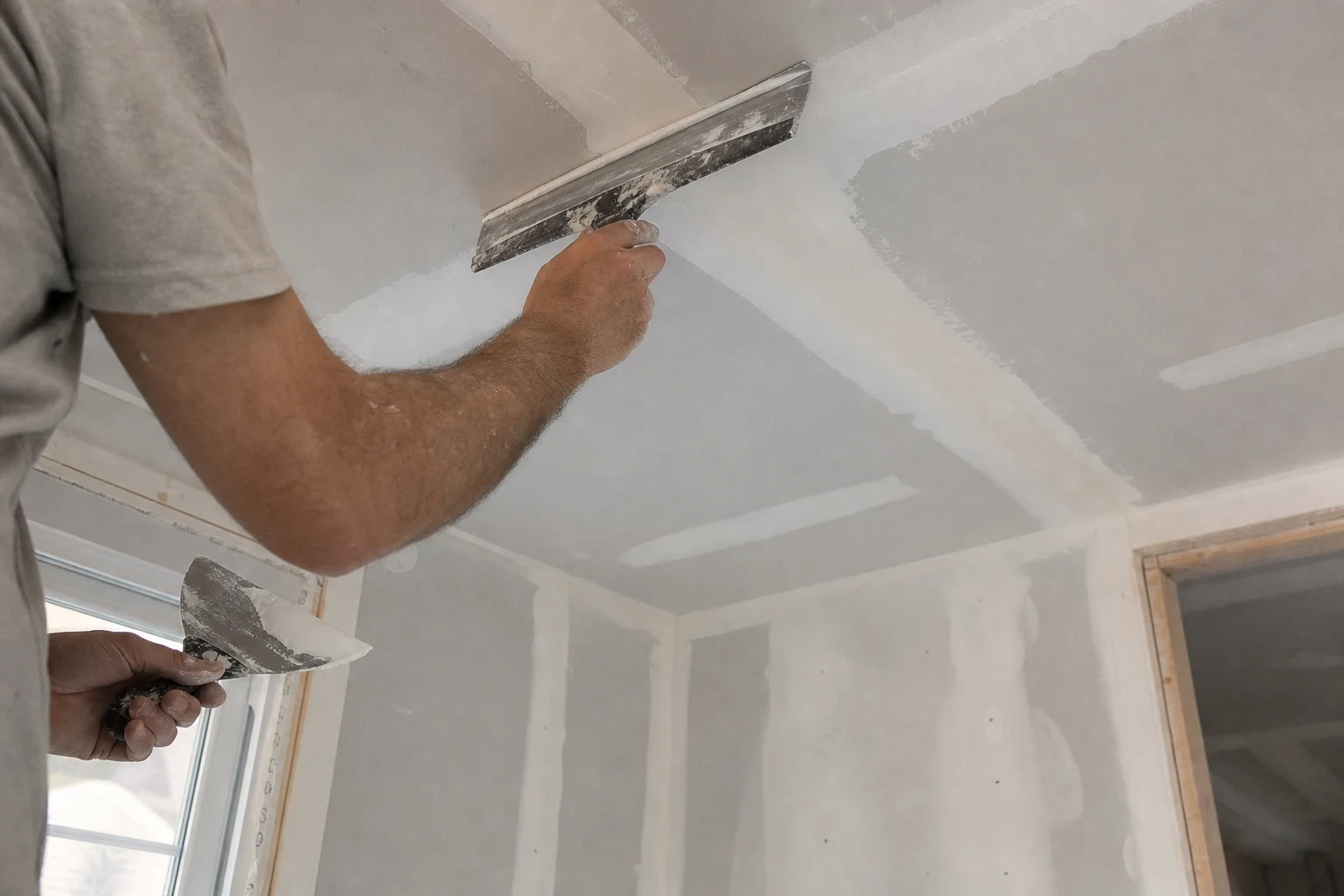
What finishing does for your walls
Hanging drywall gets the boards on the studs. Finishing is what makes a room look like a room. It covers every joint with tape and compound, fills each fastener, builds out corners with bead, and sands everything flat so light falling across the wall shows nothing. Most of what people notice about a wall, good or bad, comes from this stage.
We finish new boards after drywall hanging, and we also fix finishes that went wrong: tape lifting at the seams, bumpy joints, fasteners that show through the paint. Many of these can be corrected with a skim coat or by reworking a few seams, so tearing out sound board is rarely our first suggestion. When the paper face is torn or the board is soaked, we will say so plainly and explain what replacing that section involves.
What the finishing work includes
- Taping every joint
- Each seam where two boards meet, and every inside corner, gets tape pressed into a layer of wet joint compound. We choose paper or mesh depending on the spot, and we lean toward paper in inside corners because it flexes with the small shifts a house makes from season to season.
- Corner bead on outside edges
- Metal or paper-faced bead goes on every outside corner, then gets coated so the edge is straight and tough enough for bumps from furniture and vacuum cleaners.
- Multiple coats, each wider
- Joints get a fill coat and finish coats, each feathered out farther than the last. Wide, thin coats are what keep a seam from showing as a raised band.
- Sanding and inspection
- We sand between and after coats, then check the surface with a work light held flat to the wall. That raking light shows ridges and pinholes that overhead light hides.
- Skim coats when needed
- For walls that need to look perfectly even, or for an old finish full of flaws, we roll and trowel a thin coat of compound over the whole surface.
- Keeping your home tidy
- Drop cloths go down on the floors, and doorways and vents get taped off. Wherever we can, sanding is done with dust-control tools. Each evening we sweep up so you can still use the room.
Signs your drywall needs finishing work
Seams you can see through paint
Straight lines or ridges every four feet across a wall or ceiling usually mean the joints were not feathered wide enough.
Nail pops and screw dimples
Small round bumps or dents in rows point to fasteners that were never properly filled or have backed out.
Tape bubbling or peeling
Loose tape often happens when it was bedded without enough compound. We cut out the loose run and re-tape rather than redo the wall.
Hung boards still bare
If you or another crew hung the drywall and stopped there, the board still needs tape, coats and sanding before primer.
Patchy, uneven walls
Years of patches leave a wall with shiny spots and humps. A skim coat brings it back to one flat surface ready for a paint touch-up or fresh paint.
How a finishing job runs
- 1
Look and talk it over
We look at the boards or the existing finish with a light, point out what we see, and explain what level of finish fits the room. Repair options come first when they make sense.
- 2
Protect the room
The first thing we do on site is cover floors, seal off doorways and mask outlets and vents.
- 3
Tape and coat
Tape and the first coat go on, followed by finish coats over the next visits. Every coat has to dry completely, and humid summer weeks can stretch that, so we tell you the schedule up front.
- 4
Sand, check and clean up
We sand, inspect under raking light, touch up anything that shows, and leave the walls smooth, dust-free and ready for primer.
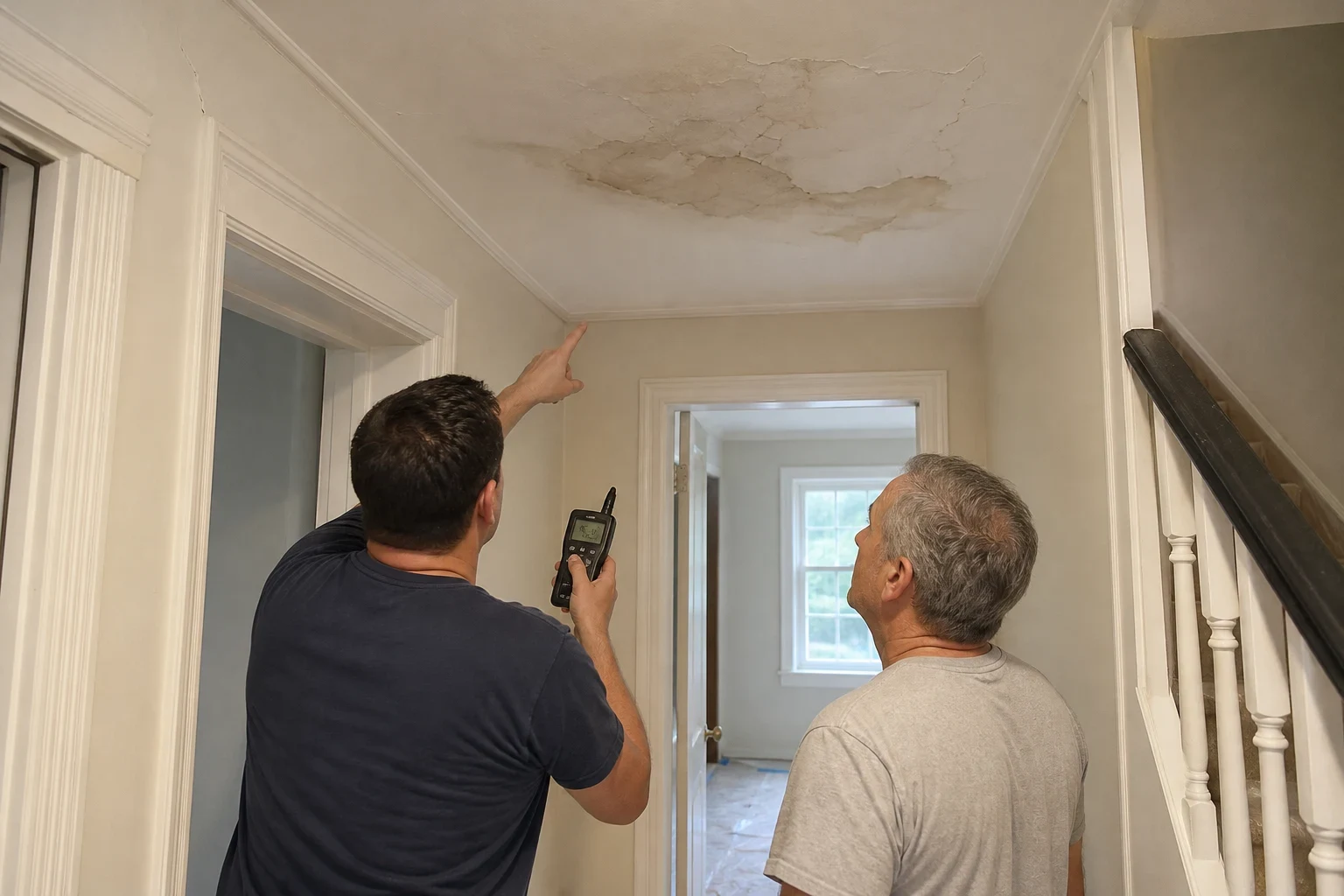
What moves the cost of drywall finishing
Finishing is priced on the work the surface needs, not a flat number per room. We walk you through the line items when we look at your walls, so you know what you are paying for from the start.
- Square footage and seams
- More board means more joints to tape and coat. Ceilings and tall walls take longer than standard walls of the same size.
- Level of finish
- A standard finish for flat paint costs less than a full skim coat for walls that will get glossy paint or strong side light from windows.
- Condition of what is there
- New board is predictable. Fixing a poor existing finish depends on how much tape is loose and how many flaws need filling first.
- Corners, angles and openings
- Rooms with many outside corners, window returns, arches or sloped ceilings add bead work and careful coating.
- Number of visits
- Drying time between coats sets the schedule. Smaller jobs spread over several short visits still need each trip.
Drywall finishing questions
Something not covered here? (908) 641-7101
How long does drywall finishing take?
A typical room takes three or four visits spread out over a few days. Compound has to dry all the way through between coats, and rushing it leads to shrinking and cracks. Quick-setting compound can speed up small areas. We share the expected schedule with you at the start.
Can you fix a bad finish without replacing the drywall?
Usually, yes. Visible seams, nail pops and lumpy patches can be corrected by re-taping problem joints or skim coating the wall. Replacement only makes sense when the board itself is damaged, such as torn paper, crumbling gypsum or water damage, and we will show you why if that is the case.
How much dust will there be?
Sanding compound creates very fine dust, and we plan around it. Doorways get sealed, floors and vents get covered, and we use dust-control sanding where the space allows. At the end of each workday you should find a clean work area.
Will the walls be ready to paint when you finish?
Yes, once they are primed. Bare compound and the paper face soak up paint differently, so a coat of primer comes first. We leave the surface smooth and ready for it, and we handle paint touch-ups over repaired areas.
Do you work outside Westfield?
Yes. We take finishing jobs in Cranford, Garwood, Scotch Plains, Summit and other nearby towns around Westfield.
Ready for walls that look finished
Tell us about the room, new boards or an old finish that bothers you, and we will explain what it needs. If a repair will do, that is what we will recommend.